
 Pin it
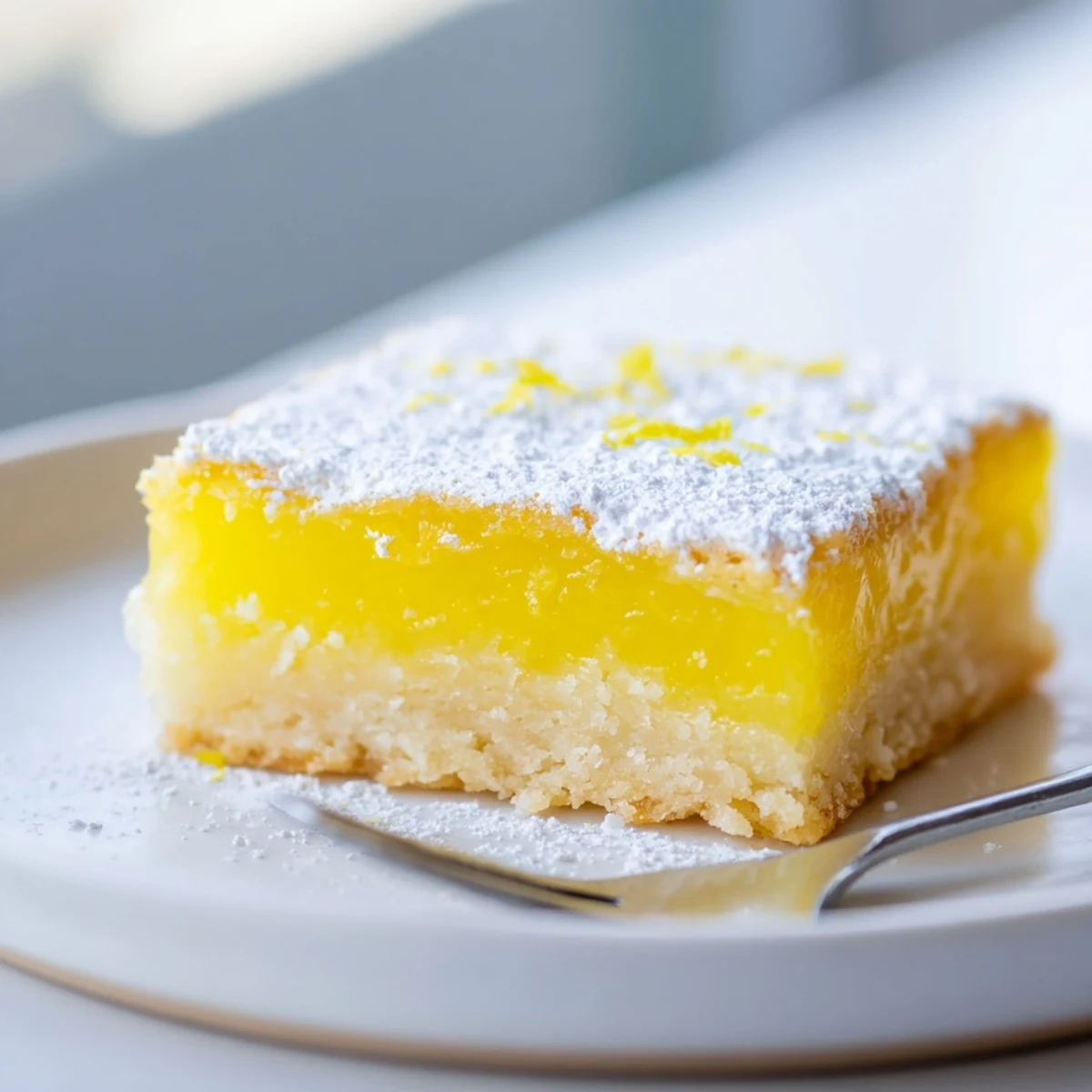
 These bright lemon bars feature a tender, buttery shortbread crust topped with a silky, tangy lemon filling that balances sweetness with vibrant citrus flavor.
Ready in just 50 minutes with simple pantry ingredients, they're an ideal make-ahead dessert for spring brunches, summer picnics, or anytime you crave a refreshing citrus treat.
The secret lies in pouring the lemon filling over the hot crust and baking at a lower temperature for a perfectly set, jiggle-free center.
My kitchen window was open the first afternoon I pulled a pan of lemon bars from the oven, and the scent of butter and citrus drifted out so powerfully that my neighbor actually called to ask what I was baking.
I brought a plate of these to a friends backyard potluck last June and watched three people skip the elaborate layer cake entirely just to claim the last bar.
Ingredients
- Unsalted butter (1 cup, softened): Good butter is everything here because the flavor shines through the crust and complements the tart filling.
- Granulated sugar (1/2 cup for crust, 1 1/2 cups for filling): Keep these measured separately since the crust needs far less sweetness than the lemon layer.
- All-purpose flour (2 cups for crust, 1/4 cup for filling): The small amount in the filling acts as a binder so the custard sets without curdling.
- Salt (1/4 tsp): Just a pinch wakes up every flavor in the shortbread.
- Large eggs (4): Room temperature eggs blend more smoothly into the filling and help it set evenly.
- Fresh lemon juice (2/3 cup, about 3 to 4 lemons): Bottled juice tastes flat, so squeeze your own and save a little extra for drizzling over berries later.
- Lemon zest (1 tbsp, finely grated): Zest holds the essential oils where all the perfume lives, so grate only the yellow skin and avoid the bitter white pith.
- Powdered sugar (for dusting): A snowy layer right before serving makes them look bakery worthy and adds a gentle sweetness to each bite.
Instructions
- Preheat and prepare the pan:
- Set your oven to 350 degrees F and line a 9 by 13 inch baking pan with parchment paper, leaving a generous overhang on the sides so you can lift the whole slab out later.
- Make the shortbread crust:
- Beat the softened butter and half cup of sugar together until pale and fluffy, then work in the flour and salt until the mixture looks like sandy crumbs that hold together when you squeeze them.
- Press and bake the crust:
- Firmly press the dough into an even layer across the bottom of your pan and bake for 18 to 20 minutes until the edges turn a light, warm gold.
- Whisk the lemon filling:
- While the crust bakes, whisk the eggs and sugar until smooth, blend in the quarter cup of flour, then stir in the fresh juice and zest until everything is silky.
- Bake the two layers together:
- Lower the oven to 325 degrees F, pour the lemon mixture over the hot crust straight from the oven, and bake another 18 to 20 minutes until the center is set with only the faintest shimmy.
- Cool, cut, and finish:
- Let the pan cool completely on a wire rack, lift the block out using the parchment handles, slice into 12 squares, and shower them with powdered sugar just before serving.
 Pin it
 There is something quietly satisfying about lifting that whole golden slab out of the pan by the parchment edges and seeing a perfect layer of sunshine curd sitting on a crisp shortbread pillow.
Making It Your Own
Swap half the lemon juice for lime and add a teaspoon of grated ginger to the filling for a tropical variation that tastes like a vacation.
Storage That Actually Works
These bars keep beautifully in the fridge for up to four days when stored in an airtight container with a sheet of parchment between layers.
Serving Suggestions and Final Thoughts
A chilled lemon bar alongside a cup of strong Earl Grey tea is one of those simple pairings that feels genuinely indulgent.
- Dust the sugar on right before serving so it never dissolves into the topping.
- Use a sharp knife wiped clean between each cut for the neatest edges.
- Remember that the bars will firm up more as they chill, so do not worry if they seem slightly soft at first.
 Pin it
 Every time I make these, someone asks for the recipe, and I always smile because the secret is simply fresh lemons and a little patience while they cool.
Recipe Q&A Section
- → Can I use bottled lemon juice instead of fresh?
-
Fresh lemon juice delivers the brightest, most vibrant flavor. Bottled juice works in a pinch but may taste slightly duller. Always use fresh zest regardless, as bottled versions don't include it.
- → Why did my lemon bars crack on top?
-
Cracking usually means the oven temperature was too high or they baked too long. Reducing the temperature to 325°F after baking the crust helps prevent this. The center should be set but still slightly soft when removed.
- → How do I know when the lemon filling is fully set?
-
Gently shake the pan — the center should not jiggle or ripple. It will continue to firm up as it cools. A slight wobble right at the center is fine when you pull it from the oven.
- → Can I freeze lemon bars for later?
-
Yes, cut them into squares and layer between sheets of parchment in an airtight container. They freeze well for up to 3 months. Thaw overnight in the fridge and dust with powdered sugar before serving.
- → What's the best way to get clean cuts when slicing?
-
Chill the bars thoroughly before cutting. Use a sharp knife wiped clean between each cut. For extra-neat edges, dip the knife in hot water and dry it before each slice.
- → Can I substitute lime or orange for the lemon?
-
Absolutely. Lime works beautifully for a more floral, tart variation. Orange creates a sweeter, milder bar. Adjust zest accordingly and keep juice quantities the same for best results.