
 Pin it
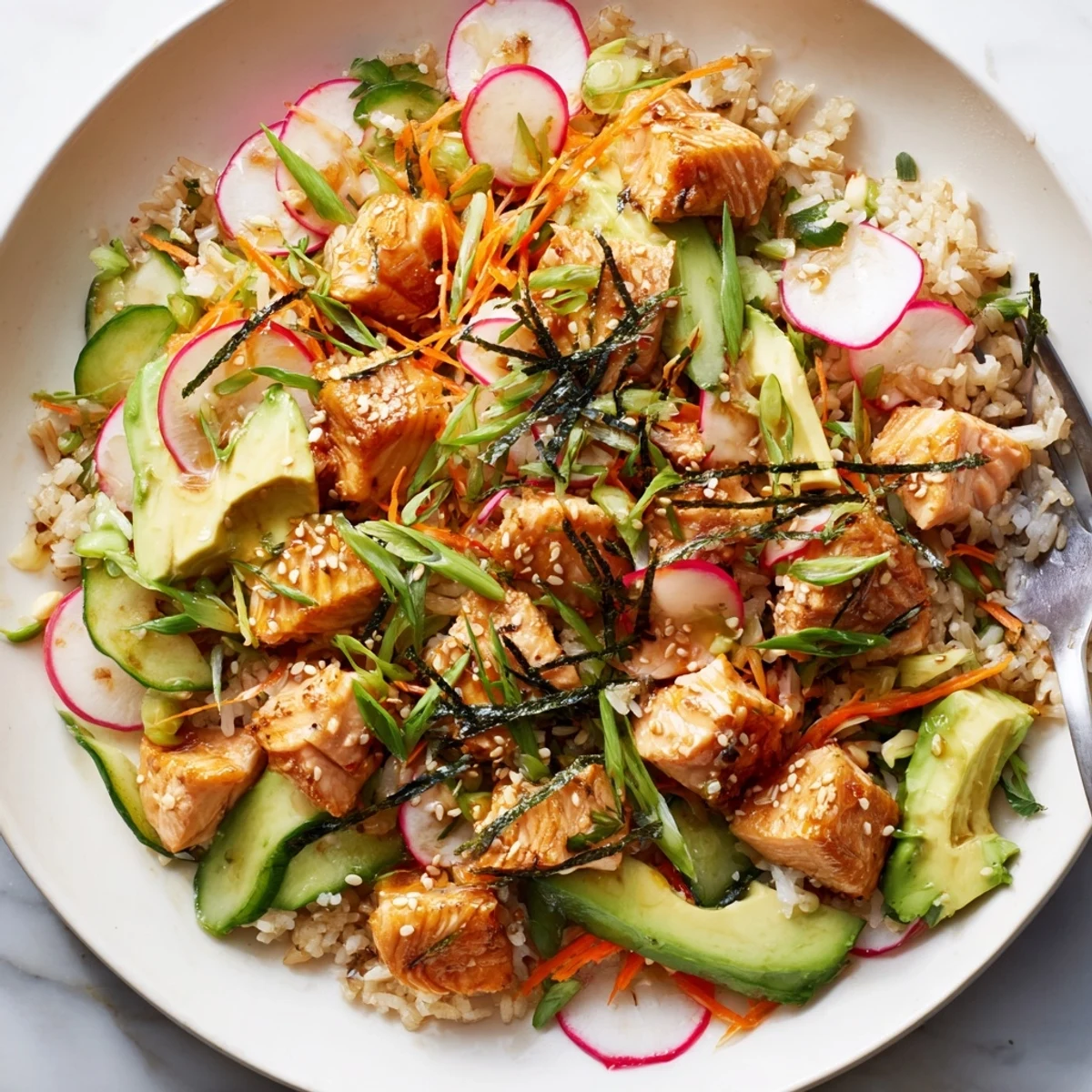
 This vibrant Asian-inspired dish features golden, pan-seared salmon cubes seasoned with soy sauce and sesame oil, served over a bed of cool jasmine rice.
Fresh cucumber, radishes, julienned carrot, and creamy avocado add color and crunch, while a bold ginger-sesame dressing ties everything together with sweet, tangy, and savory notes.
Ready in about 45 minutes, it makes a satisfying yet light meal for four. Top with sesame seeds and nori strips for an extra layer of flavor and texture.
The sizzle of salmon hitting a hot pan is one of those sounds that makes everyone in the house wander toward the kitchen, and this recipe guarantees it every single time. I threw this salad together on a humid Tuesday when the fridge offered nothing but leftovers and half a cucumber, yet it turned into the kind of meal that rewires your weeknight expectations. The ginger dressing alone is worth making a double batch, because you will want it on everything from Tuesday to Friday.
My neighbor stopped by unannounced one evening while I was plating this, and she ended up sitting on the kitchen counter eating straight from the serving bowl with chopsticks. We polished off the entire thing before the rice had a chance to cool down properly. Now she texts me every few weeks asking if I have made that salmon thing again.
Ingredients
- 500 g skin-on salmon fillet: Leave the skin on because it crisps up beautifully and adds texture to every bite, just make sure all pin bones are removed.
- 1 tbsp soy sauce: This is for the salmon marinade, and a good quality brand makes a real difference in depth of flavor.
- 1 tbsp sesame oil: Toasted sesame oil coats the salmon and gives it that unmistakable aroma that makes the kitchen smell like your favorite noodle shop.
- 1 tsp freshly ground black pepper: Freshly cracked is nonnegotiable here, it adds a gentle heat that preground pepper simply cannot replicate.
- 1 tbsp cornstarch: This is the secret weapon for that crispy exterior, dust it on just before cooking and watch the transformation.
- 2 cups cooked jasmine or sushi rice, cooled: Day-old rice actually works better because it firms up and absorbs the dressing without turning mushy.
- 1 small cucumber, thinly sliced: A mandoline gives you those paper thin rounds that look almost too pretty to eat.
- 1 carrot, julienned: Cut them as thin as you can manage, they add a satisfying crunch and a pop of orange against the greens.
- 4 radishes, thinly sliced: Their peppery bite cuts through the richness of the salmon and the dressing beautifully.
- 2 scallions, sliced: Slice them on a sharp diagonal for visual appeal and a mild onion freshness.
- 1 avocado, diced: Toss it on right at the end so it stays creamy rather than getting lost in the dressing.
- 2 tbsp fresh cilantro or mint, chopped: Mint gives a cooler vibe for summer, cilantro leans earthy and bold, and both work wonderfully.
- 3 tbsp rice vinegar: The backbone of the ginger dressing, providing a clean acidity that ties every element together.
- 1 tbsp grated fresh ginger: Grate it finely so the flavor disperses evenly without stringy bits in the dressing.
- 2 tbsp soy sauce, for dressing: A second helping of soy sauce here balances the vinegar and honey with savory umami.
- 2 tsp honey or maple syrup: Just enough sweetness to round off the sharp edges of the ginger and vinegar.
- 2 tbsp toasted sesame oil, for dressing: This is separate from the salmon coating and gives the dressing its silky, nutty body.
- 1 garlic clove, minced: One clove is all you need to add a quiet hum of warmth through the dressing.
- 1 tsp lime juice: A final bright squeeze that wakes up every flavor on the plate.
- 1 tbsp toasted sesame seeds: Scatter these on last for a nutty finish and a gentle crunch.
- Nori strips or furikake, optional: Totally optional but they push the whole dish into restaurant territory with almost zero effort.
Instructions
- Prep and season the salmon:
- Pat the salmon completely dry with paper towels and cut it into 2 cm cubes, then toss gently with soy sauce, sesame oil, and black pepper until every piece is glossed. Dust the cornstarch over the top right before cooking for maximum crunch.
- Crisp the salmon:
- Heat a nonstick skillet over medium high heat with a splash of oil and lay the cubes skin side down, letting them cook undisturbed for 3 to 4 minutes until the edges turn deeply golden. Flip carefully and crisp the other sides, then transfer to a plate and resist the urge to nibble.
- Slice the vegetables:
- While the salmon works its magic in the pan, slice the cucumber and radishes thin, julienne the carrot, cut the scallions on a bias, and dice the avocado just before assembly so it stays green.
- Whisk the ginger dressing:
- In a small bowl, combine the rice vinegar, grated ginger, soy sauce, honey, toasted sesame oil, minced garlic, and lime juice, whisking until the honey dissolves and the dressing looks unified.
- Build the salad:
- Spread the cooled rice across a wide shallow bowl or platter, arrange all the prepared vegetables artfully on top, and nestle the crispy salmon pieces over everything.
- Dress and serve:
- Drizzle the ginger dressing generously over the whole spread, scatter on your herbs, sesame seeds, and nori if using, then bring it to the table immediately while the salmon still crackles.
 Pin it
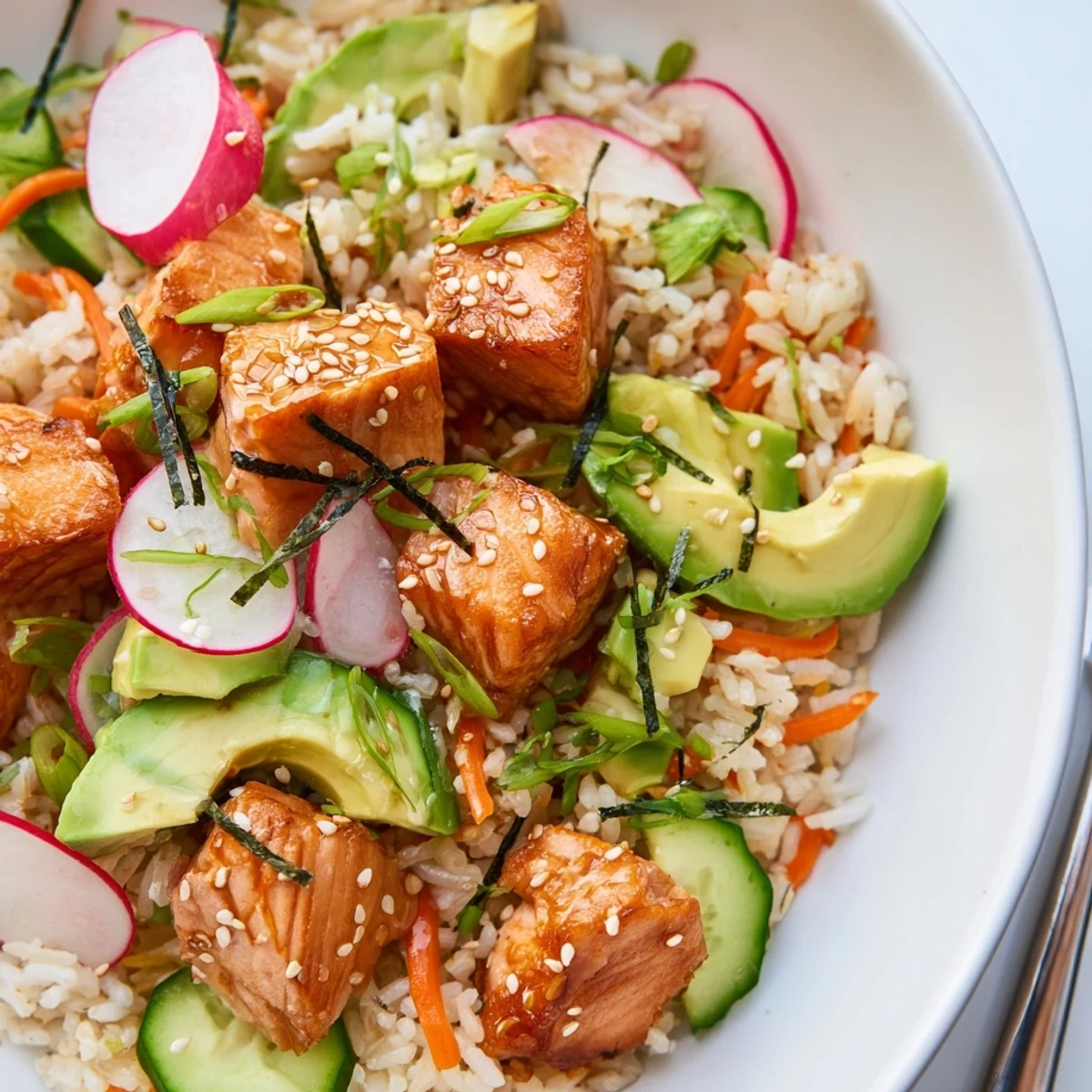
 There is something about a bowl this colorful that makes people put down their phones before they take the first bite. The contrast of cold crisp vegetables against hot crackling salmon feels like a tiny celebration on a random weeknight. It is the kind of dish that quietly becomes part of your regular rotation without anyone voting on it.
Swaps and Tweaks That Actually Work
If salmon is not happening, try this with shrimp seared in the same cornstarch method, or go full vegetarian with smoked tofu pressed dry and pan fried until the edges curl. The ginger dressing is flexible enough that it even works drizzled over a plain bowl of rice with whatever vegetables are wilting in the crisper drawer.
Getting the Crispiest Salmon Every Time
The single biggest factor is how dry the salmon is before it meets the pan, so do not skip the paper towel step even if you are in a rush. A nonstick skillet matters more here than fancy cookware, and you want the oil shimmering but not smoking when the fish goes in.
Serving and Storing Without Losing the Magic
This dish is at its absolute best the moment it is assembled, so plan to serve it right away and revel in that first crackling bite. Leftovers will still taste wonderful the next day but the salmon will soften, so adjust your expectations accordingly and maybe just eat it cold over extra rice for lunch. A dry Riesling or a tall glass of iced green tea alongside makes everything feel intentional.
- Keep the dressing in a separate jar in the fridge for up to five days and use it on anything that needs a boost.
- Store leftover salmon and vegetables apart from the rice so nothing gets soggy overnight.
- Reheat salmon briefly in a dry skillet to bring back a little of the original crisp before eating.
 Pin it
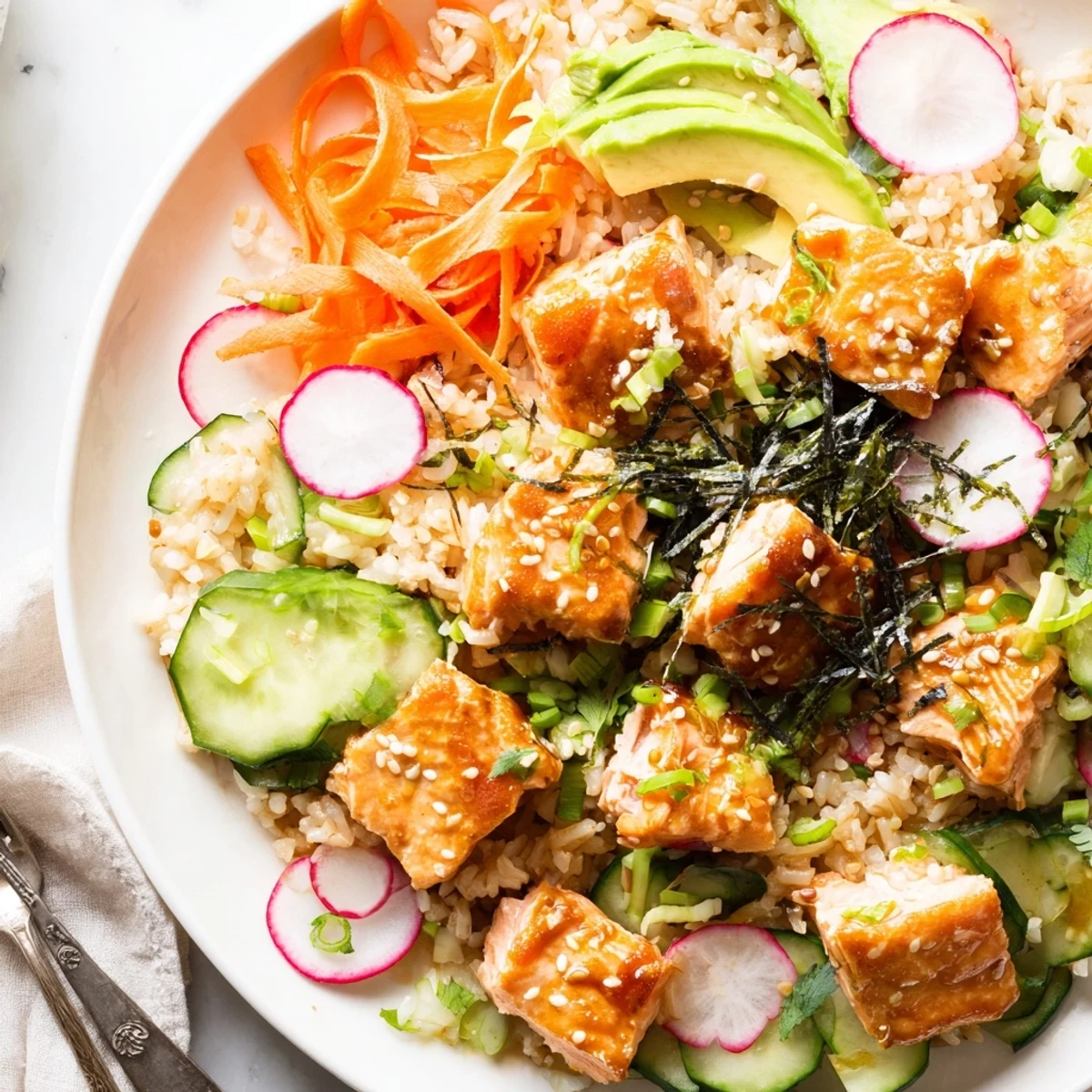
 Some recipes earn their place in your kitchen through sheer reliability, and this one does it while looking like a magazine cover. Make it once and you will find yourself reaching for the ginger without even thinking about it.
Recipe Q&A Section
- → Can I use leftover rice for this dish?
-
Yes, leftover cooled rice works perfectly. In fact, day-old rice holds its texture better when layered with the dressing and vegetables, preventing the dish from becoming mushy.
- → How do I get the salmon extra crispy?
-
Pat the salmon cubes completely dry before seasoning, then dust them lightly with cornstarch. Cook in a hot nonstick skillet with a thin layer of oil, and resist the urge to move them for 3–4 minutes per side until a golden crust forms.
- → What can I substitute for salmon?
-
Firm white fish like cod or halibut works well with the same preparation. For a plant-based option, smoked or baked tofu cubes seasoned with soy sauce and sesame oil make a satisfying alternative.
- → Can I make the ginger dressing ahead of time?
-
Absolutely. The dressing can be prepared up to 3 days in advance and stored in an airtight jar in the refrigerator. Give it a good whisk or shake before using, as the sesame oil may separate.
- → Is this dish served warm or cold?
-
It is best served immediately after assembling while the salmon is still warm and crispy. The rice and vegetables should be cool or at room temperature, creating a pleasant contrast of temperatures and textures.
- → Is this dish gluten-free?
-
It can be. Simply swap regular soy sauce for tamari or a certified gluten-free soy sauce alternative. All other ingredients in the base dish are naturally gluten-free.