
 Pin it
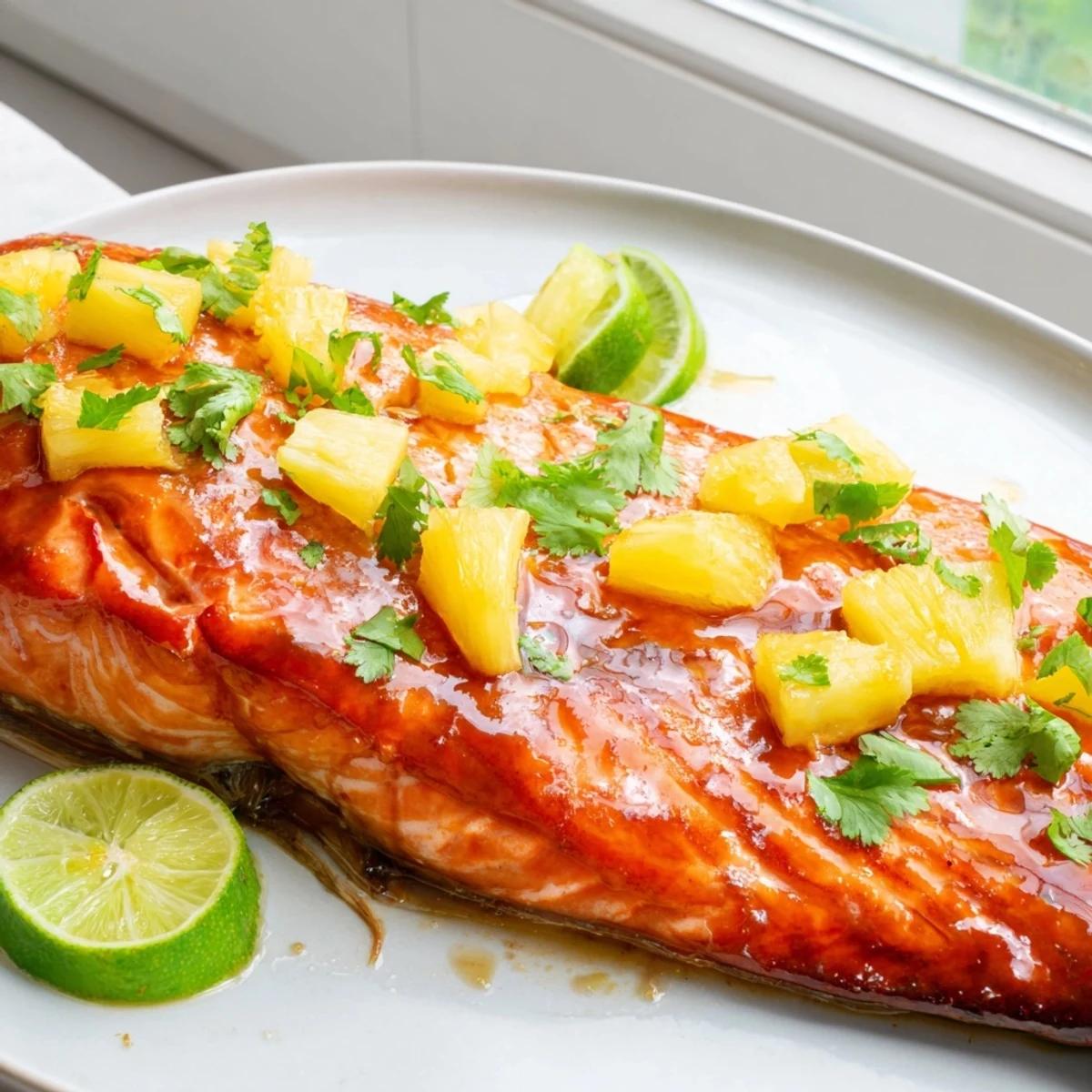
 This honey pineapple glazed salmon delivers a beautiful balance of sweet and tangy tropical flavors in under 30 minutes. Fresh salmon fillets are brushed with a homemade glaze made from pineapple juice, honey, ginger, and soy sauce, then baked until perfectly flaky.
The glaze thickens on the stovetop with a cornstarch slurry, creating a glossy coating that caramelizes slightly in the oven. Finished with fresh cilantro, diced pineapple, and a squeeze of lime, it's a light yet satisfying main course.
Pairs wonderfully with steamed or coconut rice and sautéed greens for a complete meal.
The smell of caramelizing pineapple and honey hit me before I even opened the oven door, and my roommate walked in asking if we were somehow on a tropical island. That first batch of honey pineapple glazed salmon turned a random Tuesday into something worth remembering. The glaze bubbled and clung to the fillets like amber glass, and I knew right away this one was a keeper.
I served this to my sister the night she moved into her new apartment, standing in a kitchen still half full of unpacked boxes. We ate balanced on folding chairs with paper plates, and she still texts me about it every few months.
Ingredients
- 4 salmon fillets (150 g each, skin on): Skin side down keeps the fish moist and creates a protective layer between the flesh and the hot tray.
- Salt and freshly ground black pepper: Season generously right before baking so the salt does not draw out moisture too early.
- 1/2 cup pineapple juice: Fresh pressed is ideal but a good quality bottled juice works perfectly when you are short on time.
- 1/4 cup honey: The honey gives the glaze its clinging texture and deep golden color as it bakes onto the fish.
- 2 tablespoons soy sauce (gluten free if needed): Adds the salty umami backbone that keeps the sweetness from taking over.
- 1 tablespoon freshly grated ginger: Grate it fine so it melts into the glaze rather than leaving stringy bits.
- 1 tablespoon rice vinegar or apple cider vinegar: A splash of acid wakes up every other flavor in the pan.
- 2 garlic cloves, minced: Fresh garlic only here, the jarred stuff tastes flat next to pineapple and honey.
- 1 tablespoon cornstarch mixed with 2 tablespoons water: This slurry is what turns a thin sauce into a glossy glaze that actually sticks.
- 2 tablespoons fresh cilantro or parsley, chopped: Pick cilantro for tropical vibes or parsley if you want something milder.
- 1/2 cup fresh pineapple, finely diced: Little bursts of fresh fruit on top make each bite feel like a finished dish.
- Lime wedges for serving: A squeeze at the table brightens everything up one last time.
Instructions
- Get the oven ready:
- Preheat to 200 degrees Celsius (400 degrees Fahrenheit) and line a baking tray with parchment paper so cleanup is painless.
- Season the salmon:
- Pat the fillets dry with a paper towel and season with salt and pepper, then place them skin side down on the tray with a little space between each one.
- Build the glaze:
- Combine pineapple juice, honey, soy sauce, ginger, vinegar, and garlic in a small saucepan over medium heat, stirring now and then until it comes to a gentle simmer.
- Thicken it up:
- Whisk in the cornstarch slurry and keep stirring for about two to three minutes until the glaze coats the back of a spoon and looks like warm honey.
- First glaze coat:
- Brush roughly half the glaze over the salmon fillets, saving the rest for after they bake so you get that layered finish.
- Bake until just right:
- Slide the tray into the oven for ten to twelve minutes, watching for the moment the fish flakes easily and turns opaque at the thickest part.
- Finish and serve:
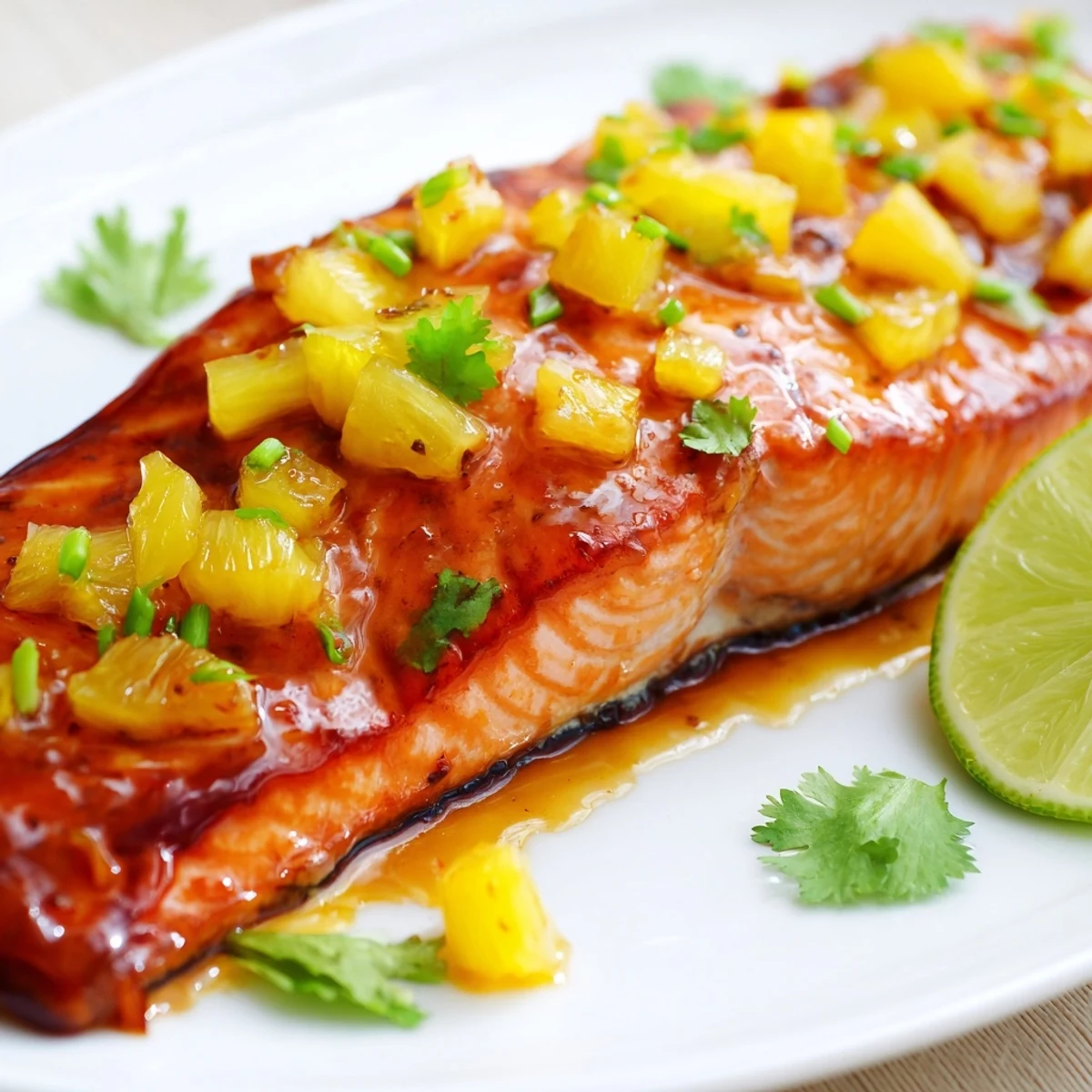
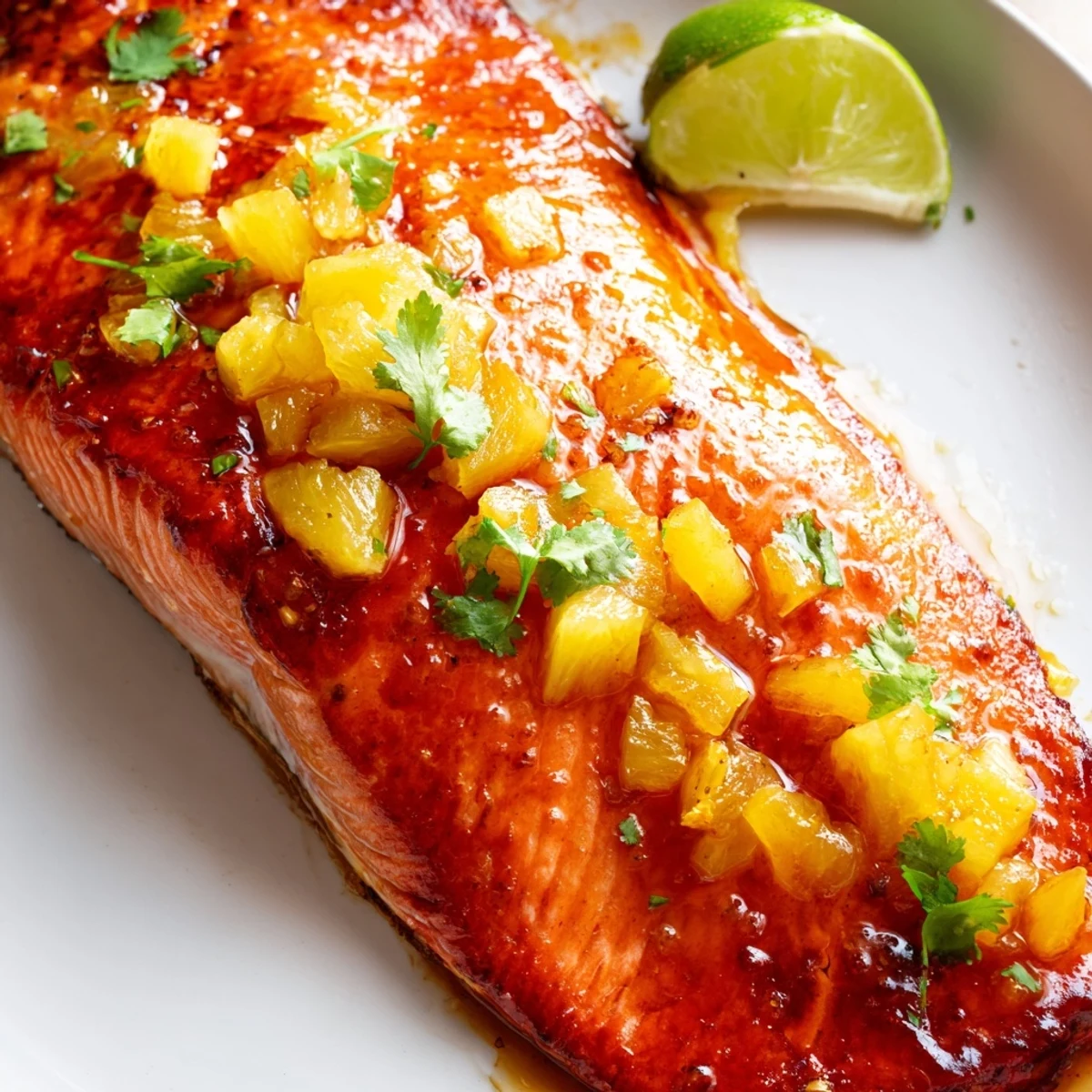
- Pull the salmon out, brush with the remaining glaze, scatter cilantro and diced pineapple over the top, and bring them to the table with lime wedges alongside.
 Pin it
 The night I brought this to a potluck, three people pulled me aside to ask what was in the glaze, and someone actually licked their plate when they thought nobody was looking.
What to Serve Alongside
Steamed white rice soaks up the extra glaze like a sponge and turns this into a proper meal. Coconut rice is even better if you have the ten minutes to make it. Sautéed greens with a squeeze of lime cut through the richness and keep everything feeling light.
Making It Your Own
A pinch of chili flakes in the glaze adds a gentle heat that plays beautifully against the sweet pineapple. You can swap honey for maple syrup if that is what you have on hand, and the flavor shifts in a lovely direction without losing the character of the dish.
Getting the Salmon Right
The biggest mistake I made early on was overcooking the fillets because I was afraid of undercooked fish. Salmon is ready the moment it flakes but still has a hint of translucency at the very center. Carryover heat finishes the job while you glaze and garnish.
- Take the salmon out of the fridge fifteen minutes before baking so it cooks evenly.
- Use a pastry brush for the glaze instead of a spoon so you get an even coat.
- Check at ten minutes rather than twelve because thinner fillets cook faster than you expect.
 Pin it
 Some recipes earn a permanent spot in your rotation because they ask for almost nothing and give back so much. This is one of those, and I hope it becomes yours too.
Recipe Q&A Section
- → Can I use frozen salmon fillets instead of fresh?
-
Yes, frozen salmon works well. Thaw it completely in the refrigerator overnight and pat the fillets dry with paper towels before seasoning and glazing to ensure proper adhesion.
- → How do I know when the salmon is cooked through?
-
The salmon is done when it flakes easily with a fork and reaches an internal temperature of 63°C (145°F). Avoid overcooking — the fish should still look slightly translucent in the very center when you remove it from the oven.
- → What can I substitute for pineapple juice in the glaze?
-
Mango nectar or orange juice can replace pineapple juice, though the tropical flavor profile will shift slightly. For the closest result, use passion fruit juice mixed with a squeeze of lime.
- → Can I make this on the stovetop or grill instead of baking?
-
Absolutely. Pan-sear the salmon skin-side down in an oven-safe skillet for 4 minutes, then flip and cook 3–4 more minutes, basting with glaze. On a grill, use a cedar plank or foil and cook over medium heat for 12–15 minutes, brushing with glaze halfway through.
- → How should I store and reheat leftovers?
-
Store leftover salmon in an airtight container in the refrigerator for up to 2 days. Reheat gently in a 150°C (300°F) oven for 8–10 minutes to preserve moisture. Avoid microwaving, which can dry out the fish and make the glaze rubbery.
- → Is this dish suitable for a gluten-free diet?
-
Yes, as long as you use gluten-free soy sauce or tamari. Double-check that your cornstarch is certified gluten-free and verify all other ingredient labels for hidden gluten.