
 Pin it
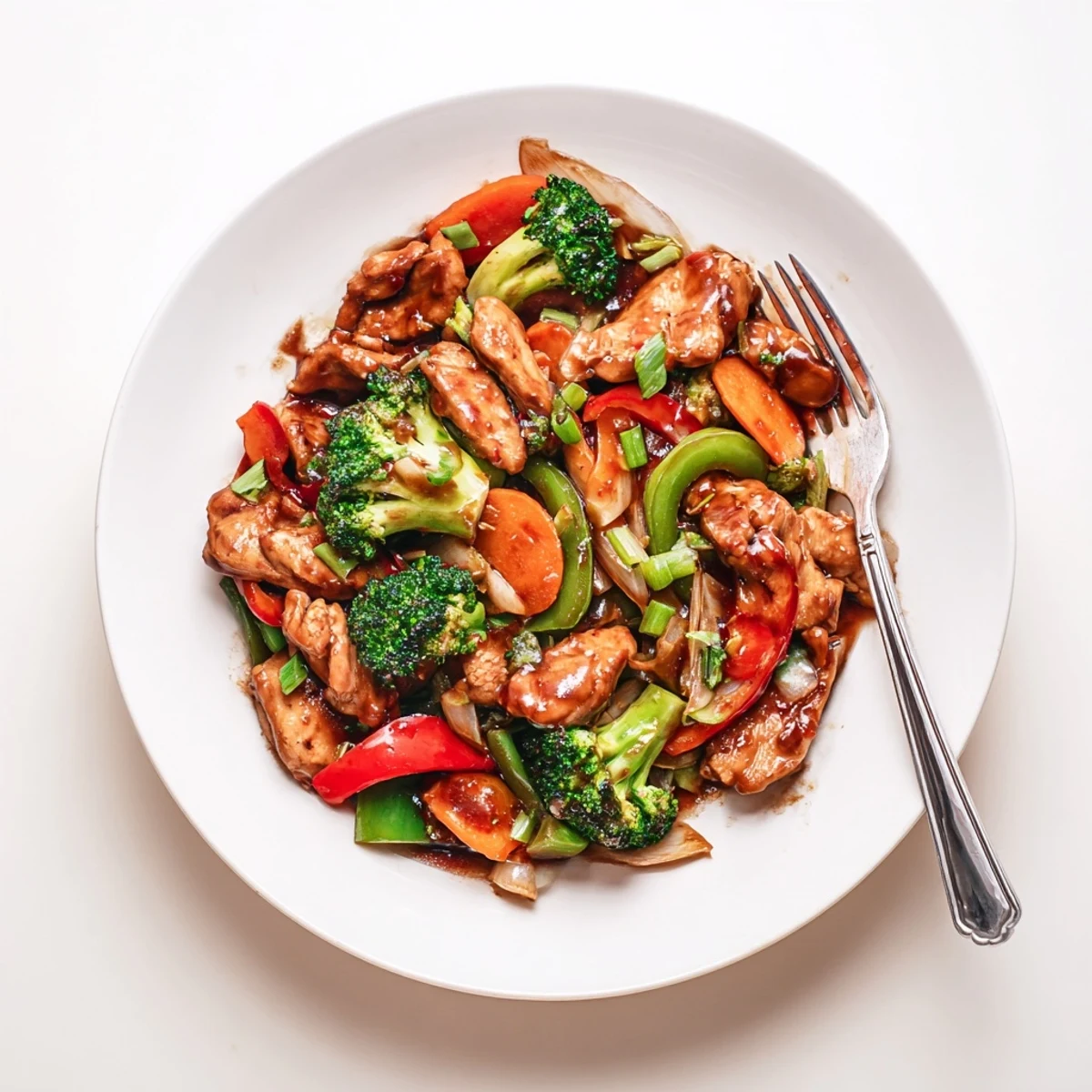
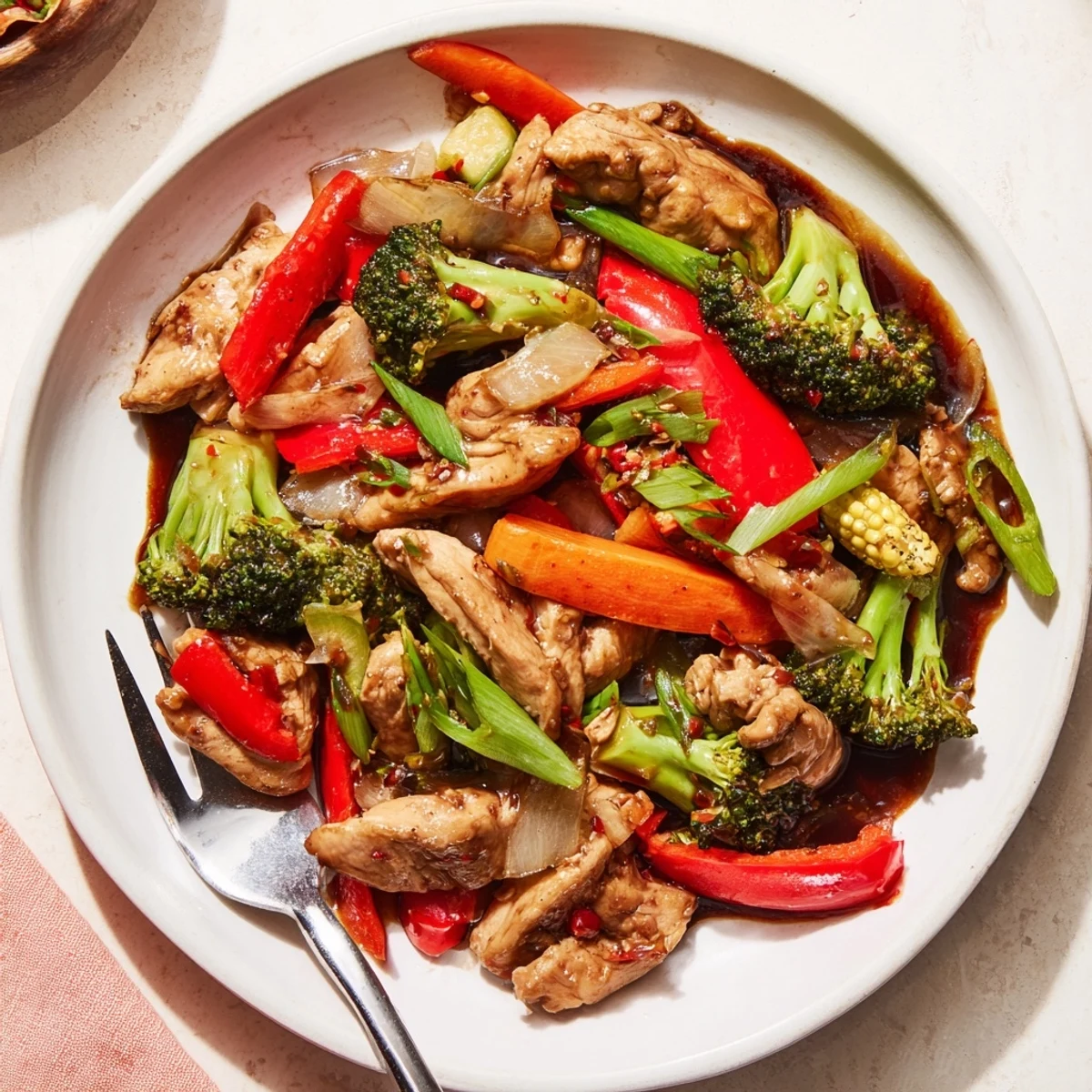
 This Hunan chicken stir-fry brings together tender marinated chicken breast with broccoli, bell peppers, carrots, and baby corn in a wok over high heat.
The signature sauce combines chili bean paste, soy sauce, oyster sauce, and rice vinegar for a bold, spicy-savory profile that coats every bite with a glossy finish.
Marinating the chicken in Shaoxing wine, soy sauce, and cornstarch ensures each piece stays juicy and silky. The entire dish comes together in about 35 minutes, making it an excellent choice for a flavorful weeknight dinner served over steamed rice.
The wok was still smoking when my neighbor walked through the kitchen door, drawn by the sharp, fragrant hit of chili bean paste hitting hot oil. Hunan chicken has a way of announcing itself before you even set the table. It is loud, unapologetic, and deeply satisfying in a way that only stir fried dishes with real fire can be. That evening, we stood around the stove eating straight from the pan because nobody wanted to wait for plates.
My friend David, who claims he cannot cook anything beyond toast, once made this entirely on his own after watching me prepare it once. He called me mid stir fry, panicking because the wok was smoking and he thought he had ruined it. I told him that was exactly the point, and his Hunan chicken turned out beautifully charred and full of that smoky wok hei flavor we all chase.
Ingredients
- Boneless skinless chicken breast (500 g, thinly sliced): Slice against the grain for the most tender bites, and partially freezing the breast for 15 minutes makes thin slicing effortless.
- Soy sauce (1 tbsp for marinade plus 2 tbsp for sauce): Use a good quality Chinese soy sauce for depth, and the marinade portion tenderizes while adding savory foundation.
- Shaoxing wine (1 tbsp): This is the secret backbone of Chinese marinades, and dry sherry works in a pinch if your pantry lacks it.
- Cornstarch (1 tsp): Coats the chicken in a velvety layer that locks in moisture during high heat cooking.
- Sesame oil (1/2 tsp, for marinade): Just a touch in the marinade adds nutty fragrance without overpowering.
- Broccoli florets (1 cup): Cut into uniform, bite sized pieces so every floret cooks evenly and catches the sauce.
- Red and green bell peppers (1 each, sliced): The color combination is beautiful, and their natural sweetness balances the heat beautifully.
- Carrot (1 cup, thinly sliced): Thin slices cook quickly and add a gentle crunch that holds up to the sauce.
- Baby corn (8, halved): These bring a lovely tender snap and make the dish feel like a proper restaurant spread.
- Garlic (2 cloves, minced) and ginger (1 inch piece, minced): Fresh is nonnegotiable here, and mince them finely so they distribute their punch evenly.
- Spring onions (2, sliced): Save these for the end so they stay bright and fresh as a finishing touch.
- Oyster sauce (1 tbsp): Adds a deep, savory sweetness that rounds out the chili heat perfectly.
- Chili bean paste or Doubanjiang (1 tbsp): This is the soul of Hunan flavor, bringing fermented, salty heat that defines the whole dish.
- Rice vinegar (1 tbsp): A subtle acidity that brightens the sauce and keeps it from feeling heavy.
- Hoisin sauce (1 tbsp): Contributes a gentle sweetness and body that helps the sauce cling to every ingredient.
- Sugar (1 tsp): Just enough to balance the salty and sour elements without making it sweet.
- Water (2 tbsp): Thins the sauce so it coats rather than clumps, adjusting consistency as it heats.
- Vegetable oil (2 tbsp): A neutral oil with a high smoke point is essential for proper wok cooking.
Instructions
- Marinate the chicken:
- Toss the sliced chicken with soy sauce, Shaoxing wine, cornstarch, and sesame oil until every piece is evenly coated. Let it sit for 10 to 15 minutes while you prep everything else.
- Build the sauce:
- Whisk together the soy sauce, oyster sauce, chili bean paste, rice vinegar, hoisin, sugar, and water in a small bowl until smooth. Taste it briefly on your finger so you know what you are working with.
- Sear the chicken:
- Heat one tablespoon of oil in your wok over the highest heat your stove allows, then spread the chicken in a single layer and let it sear without stirring for a minute. Stir fry for 3 to 4 minutes total until golden and just cooked through, then remove to a plate.
- Stir fry the vegetables:
- Add the remaining oil to the same wok, toss in the garlic and ginger until fragrant, then add all the vegetables. Keep them moving for 3 to 5 minutes until they are brightly colored and crisp tender with slight char spots.
- Bring it all together:
- Return the chicken to the wok, pour in the sauce, and toss everything vigorously so every surface gets coated. Cook for 2 to 3 minutes until the sauce thickens, turns glossy, and clings to the chicken and vegetables.
- Finish and serve:
- Kill the heat, scatter the spring onions over the top, and give it one final toss. Serve immediately over steamed rice while the wok is still sizzling.
 Pin it
 There was a rainy Tuesday when I doubled this recipe for an impromptu dinner with friends, and we ended up sitting on the kitchen floor with bowls of Hunan chicken long after the rain stopped. Food like this does not need a dining table or formal settings to become a memory worth keeping.
The Right Wok Changes Everything
For years I used a nonstick skillet out of convenience, and the results were always decent but never quite right. Switching to a carbon steel wok gave me that fierce, concentrated heat that creates the slightly smoky edges and quick sear that define good stir frying. Season it properly, never wash it with soap, and it will reward you for decades.
Handling the Heat Level
Hunan cuisine is known for its assertive spice, but you have more control than you might think. The chili bean paste provides a warm, building heat rather than a sharp jab, and you can dial it down to half a tablespoon if you are serving sensitive palates. For those who crave more fire, toss in dried red chilies with the garlic and ginger.
Serving and Storing Like a Pro
This dish is at its absolute best the moment it leaves the wok, when the sauce is still bubbling and the vegetables retain their bright crunch. Steamed jasmine rice is the classic pairing, but noodles work beautifully if you are feeling unconventional. If you have leftovers, they reheat well in a hot skillet with a splash of water to revive the sauce.
- Refrigerate leftovers in an airtight container for up to 3 days.
- Avoid microwaving if possible, as it softens the vegetables into sadness.
- A quick reheat in a pan tastes nearly as good as the first night.
 Pin it
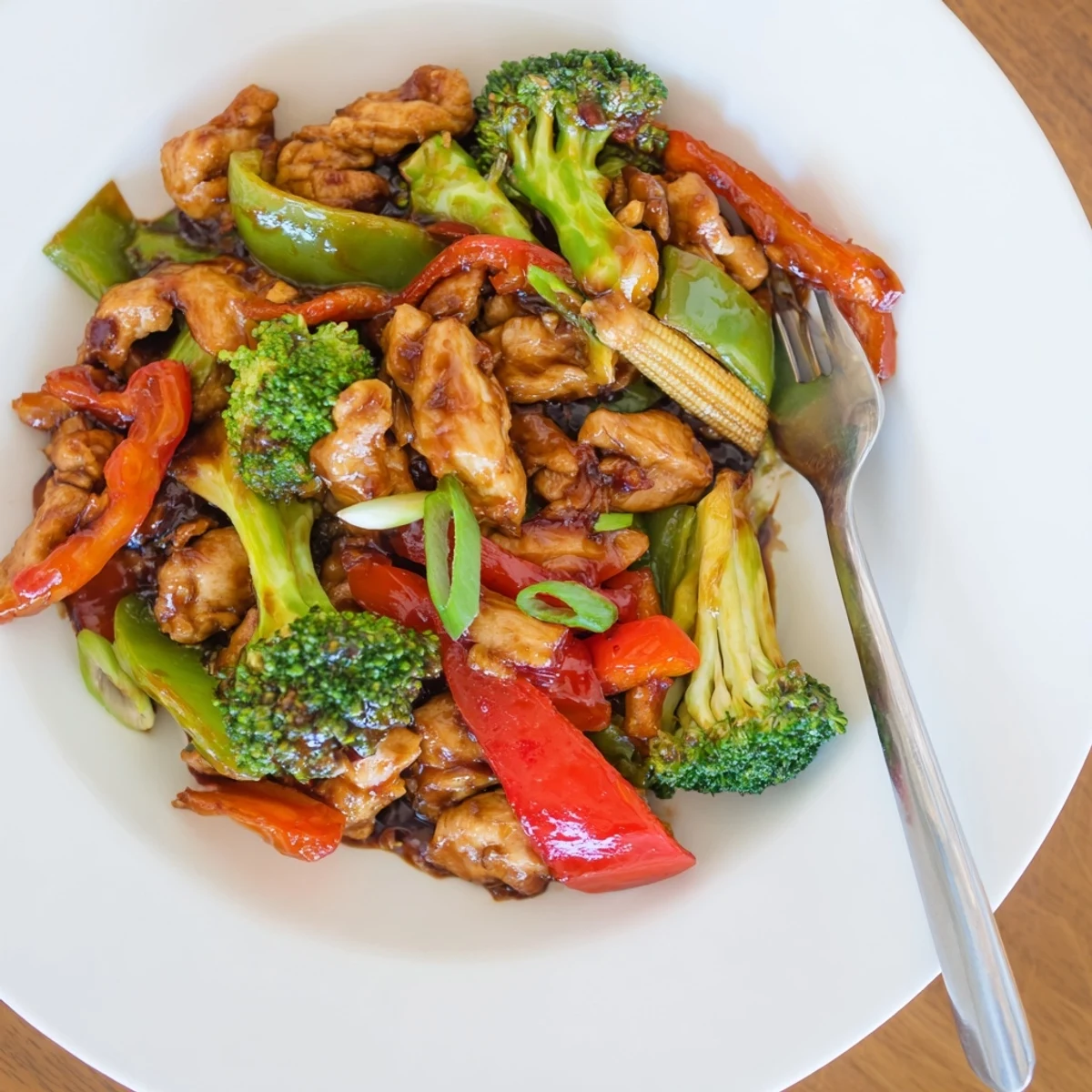
 Some recipes become staples because they fit into your life without fuss, and this Hunan chicken earns its place in that rotation every single time. Cook it once and you will find yourself reaching for the wok again before the week is out.
Recipe Q&A Section
- → What makes Hunan chicken different from Szechuan chicken?
-
Hunan chicken leans into straightforward heat and savory depth, using chili bean paste and fresh aromatics like garlic and ginger.
Szechuan chicken features the numbing sensation of Sichuan peppercorns alongside chili heat. Hunan cuisine tends to be hotter and less complex in spice profile, focusing on pure chili warmth and bold fermented flavors.
- → Can I use chicken thighs instead of breast?
-
Yes, boneless chicken thighs work wonderfully and actually stay juicier during the high-heat stir-frying process.
Cut them into thin, even slices so they cook through quickly and absorb the marinade and sauce just as effectively.
- → How do I get the best stir-fry results at home?
-
Use a wok or large skillet and make sure it is screaming hot before adding oil. Cook the chicken in a single layer without overcrowding, which ensures browning rather than steaming.
Have all your vegetables prepped and the sauce mixed before you start cooking, since stir-frying moves fast and leaves no time for chopping once the heat is on.
- → Is there a substitute for Shaoxing wine?
-
Dry sherry is the closest substitute and widely available. You can also use mirin, though it adds a slightly sweeter note.
In a pinch, a mix of rice vinegar and a pinch of sugar can approximate the depth that Shaoxing wine brings to the marinade.
- → What should I serve with Hunan chicken?
-
Steamed jasmine rice is the classic pairing, soaking up the bold, glossy sauce perfectly.
You could also serve it alongside plain noodles, cauliflower rice for a low-carb option, or with additional Chinese vegetable sides like garlicky bok choy or steamed green beans.
- → How spicy is this dish and can I adjust the heat?
-
The chili bean paste provides a moderate, building warmth. For milder results, reduce the doubanjiang to half a tablespoon.
To turn up the fire, add dried red chili flakes, sliced fresh bird's eye chilies, or a spoonful of chili oil during the final toss in the wok.