
 Pin it
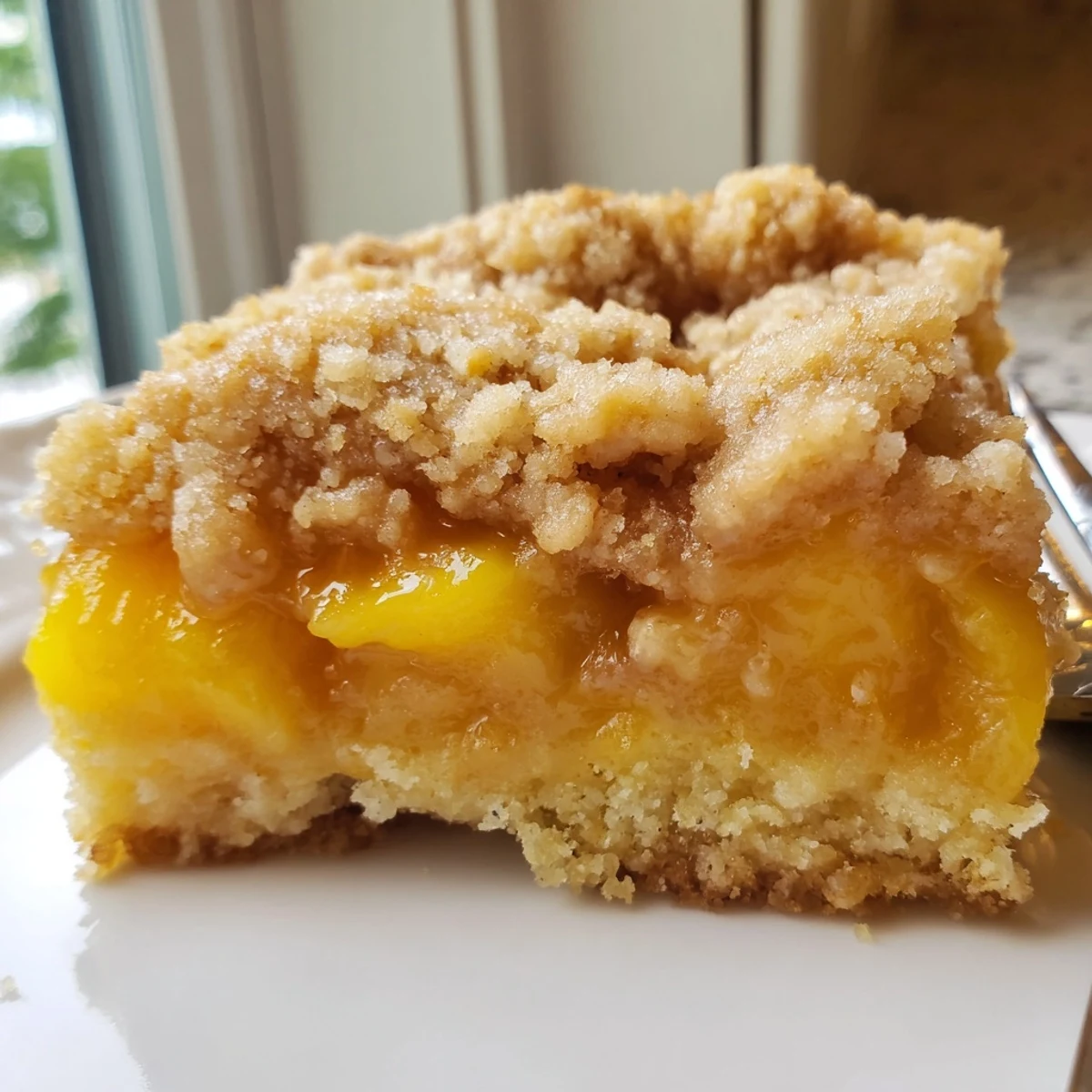
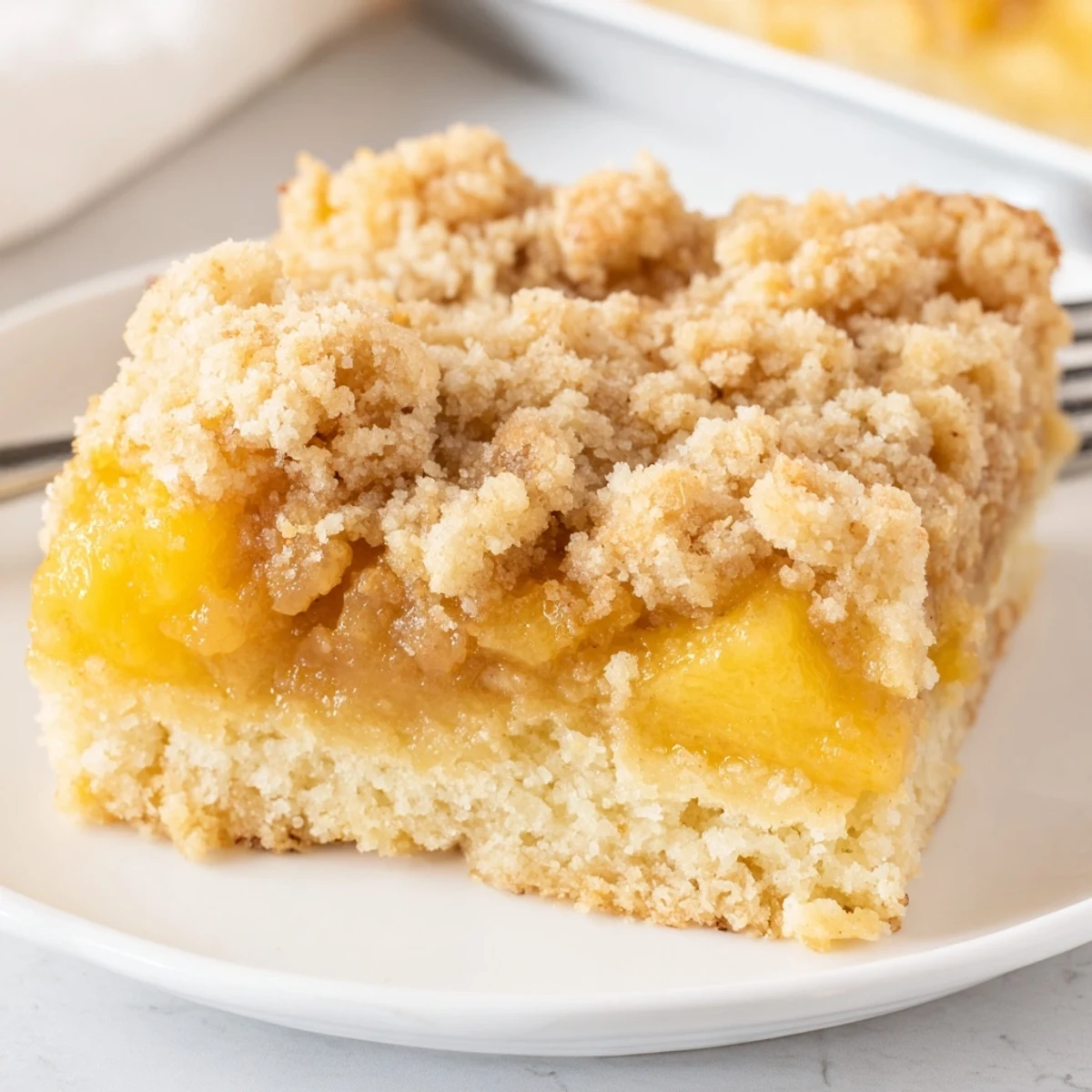
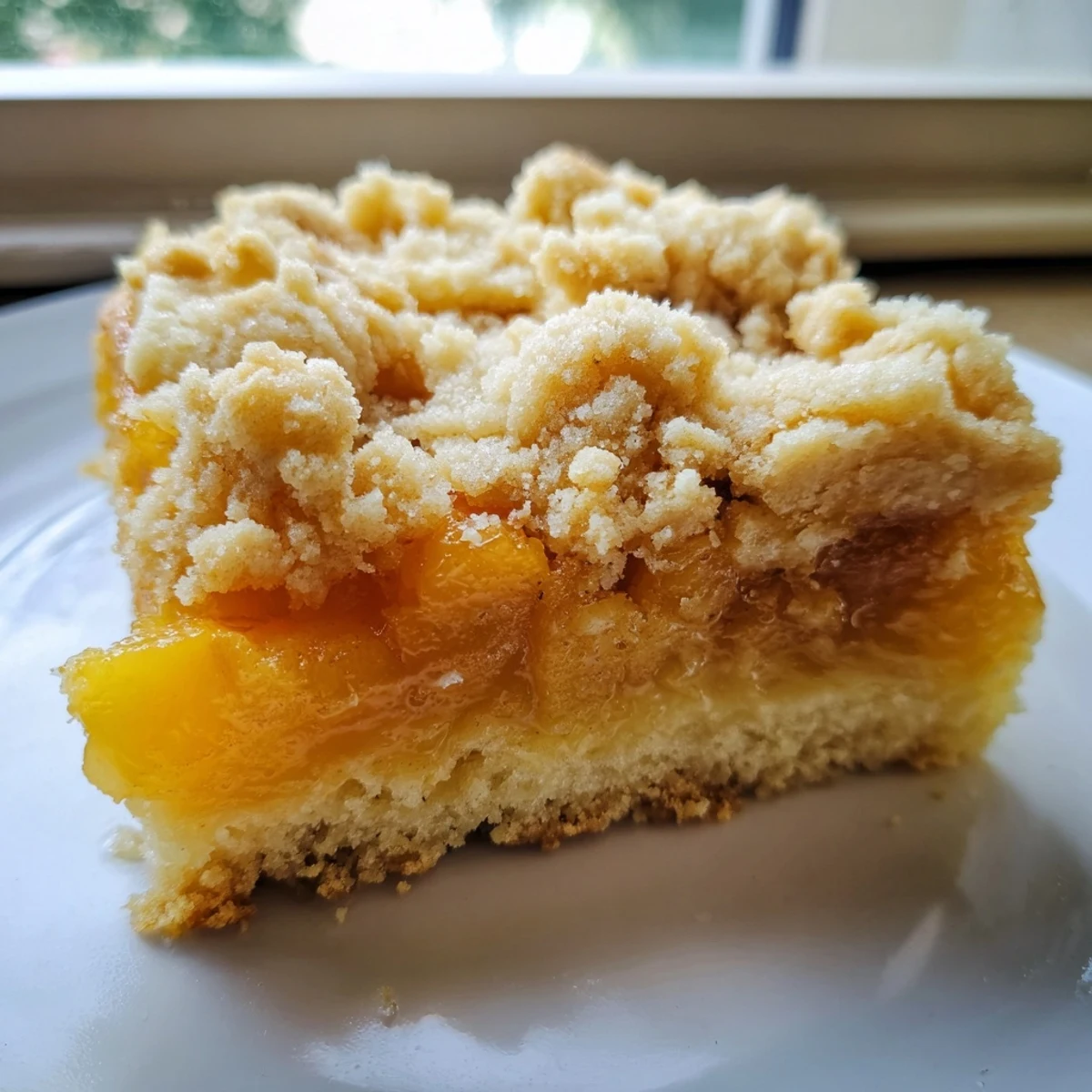
 These peach bars combine a buttery shortbread crust with a juicy, tender peach filling and a crunchy cinnamon streusel topping. Fresh or canned peaches work beautifully, tossed with sugar, cornstarch, lemon juice, and vanilla until perfectly coated.
The crust comes together quickly by creaming butter and sugar, then pressing the dough into a baking pan for a brief pre-bake. The cinnamon streusel adds warm spice and irresistible crumbly texture, made simply by combining flour, brown sugar, cinnamon, and melted butter with a fork.
Ready in about an hour and yielding 12 generous bars, they're a wonderful addition to summer gatherings, potlucks, or everyday treats served warm with a scoop of vanilla ice cream.
August in Georgia means one thing: peaches everywhere, and the sweet smell drifting through every farmers market stall. One Saturday, I walked away with a bag so heavy the handles strained, and those peaches ended up in these bars, which disappeared within the hour at a backyard potluck. The cinnamon streusel on top cracks slightly when you bite in, giving way to a soft, jammy peach layer that tastes like summer condensed into a single square. This recipe has been my go-to dessert ever since that afternoon.
My neighbor once knocked on my door holding a plate of these bars, asking for the recipe before she even finished chewing the first bite. That moment taught me that sharing food, especially something this comforting, opens doors faster than any introduction ever could.
Ingredients
- Unsalted butter (1 cup, softened for crust and 6 tablespoons melted for streusel): Using unsalted lets you control the salt level, and softened butter creams into the crust beautifully while melted butter creates those irresistible streusel clumps.
- Granulated sugar (2/3 cup for crust, 1/3 cup for filling): The crust sugar keeps things delicate, while the filling sugar draws out the natural juices from the peaches.
- All-purpose flour (2 cups for crust, 3/4 cup for streusel): Measure by spooning into the cup and leveling off, because packed flour makes the crust tough and dense.
- Salt (1/2 teaspoon for crust, 1/4 teaspoon for streusel): Salt sharpens every flavor here, especially the cinnamon and brown sugar in the topping.
- Fresh or canned peaches (3 cups diced): Fresh peaches at peak ripeness give the best texture, but well drained canned peaches work wonders in a pinch.
- Cornstarch (2 tablespoons): This thickens the peach juices so your bars set cleanly instead of turning into a soupy mess.
- Lemon juice (1 tablespoon): A bright squeeze that balances the sweetness and keeps the peaches from browning.
- Vanilla extract (1/2 teaspoon): Just enough to round out the filling with a gentle warmth underneath the fruit.
- Light brown sugar (1/2 cup, packed): Packed firmly into the measuring cup, this brings molasses depth to the streusel that plain sugar simply cannot match.
- Ground cinnamon (1/2 teaspoon): The fragrant bridge between the peaches and the buttery topping, tying everything together.
Instructions
- Preheat and prepare the pan:
- Set your oven to 350 degrees F and line a 9 by 13 inch baking pan with parchment paper, leaving overhang on two sides like handles. This simple trick saves you from ever wrestling bars out of a pan again.
- Make the buttery crust:
- Cream the softened butter and granulated sugar together until pale and fluffy, then gently mix in the flour and salt until the dough just holds together. Press it firmly and evenly into the bottom of your lined pan using your palms or the back of a measuring cup.
- Blind bake the crust:
- Slide the pan into the oven for about 15 minutes, just until the edges turn a soft gold. Pull it out and let it rest while you pull the rest together.
- Prepare the peach filling:
- Toss the diced peaches with sugar, cornstarch, lemon juice, and vanilla in a bowl until every piece glistens. Let it sit for a few minutes so the peaches release some of their juices and the cornstarch dissolves completely.
- Mix the cinnamon streusel:
- Stir together the flour, brown sugar, cinnamon, and salt in a separate bowl, then pour in the melted butter. Mash and stir with a fork until the mixture looks like wet sand with clumps of all sizes throughout.
- Assemble the bars:
- Spread the peach filling in an even layer across the warm crust, making sure every corner gets some fruit. Scatter the streusel over the top generously, letting some larger clumps sit proudly on the surface.
- Bake until golden and bubbling:
- Bake for about 25 minutes, watching for the streusel to turn deep golden and the peach filling to bubble up around the edges. Your kitchen will smell absolutely incredible at this point.
- Cool completely and slice:
- Resist the urge to cut in early and let the bars cool completely in the pan so the filling sets properly. Grab the parchment handles, lift the whole slab out, and cut into twelve neat squares with a sharp knife.
 Pin it
 The real magic happened when I served these at a family reunion and watched my stoic uncle go back for a third bar without saying a word. Food does that sometimes, speaks louder than any compliment ever could.
Swaps and Additions Worth Trying
Nectarines or apricots slide right into this recipe with zero adjustments, and each brings its own personality to the filling. Tossing a handful of chopped toasted pecans or walnuts into the streusel adds a nutty crunch that takes these bars from great to unforgettable. Serve them slightly warm under a scoop of vanilla ice cream and you will have everyone at the table speechless.
Getting the Texture Just Right
The difference between good bars and incredible bars comes down to how you handle the streusel. Squeezing handfuls of the butter and flour mixture together and then breaking them apart creates those beautiful bakery style clumps. Undermixing leaves the topping sandy and fine, while overmixing turns it into a solid sheet, so find that happy middle ground where varied chunks coexist with finer crumbs.
Storing and Sharing Your Bars
These bars keep beautifully at room temperature in an airtight container for up to three days, though they rarely last that long in my house. The crust stays sturdy and the filling holds its shape, making them perfect for packing into lunchboxes or bringing to a picnic.
- Refrigerate any leftover bars after day two to keep the peach filling fresh and safe.
- Freeze individual squares wrapped tightly in plastic for up to two months, then thaw at room temperature when the craving hits.
- Always cut with a clean, sharp knife for the neatest edges, wiping the blade between cuts.
 Pin it
 Every batch of these peach bars carries the warmth of the season straight from oven to table. Share them generously, because that is what they were made for.
Recipe Q&A Section
- → Can I use canned peaches instead of fresh ones?
-
Yes, canned peaches work well in these bars. Drain them thoroughly before dicing to prevent excess moisture from making the crust soggy. Fresh peaches are ideal when in season, but canned peaches are a convenient year-round alternative.
- → How should I store leftover peach bars?
-
Store cooled peach bars in an airtight container at room temperature for up to two days. For longer storage, refrigerate them for up to five days. You can also freeze them individually wrapped for up to three months.
- → What can I substitute for peaches?
-
Nectarines and apricots are excellent substitutes that work with the same preparation method. Sliced plums or a mix of stone fruits also pair beautifully with the cinnamon streusel topping.
- → Do I need a stand mixer to make the crust?
-
No, a stand mixer is optional. You can cream the butter and sugar by hand or with a hand mixer, then mix in the flour and salt using a fork or your fingers until the dough comes together.
- → Can I add nuts to the streusel topping?
-
Absolutely. Chopped toasted pecans or walnuts add wonderful crunch and flavor to the streusel. Stir in about half a cup of chopped nuts when preparing the streusel mixture.
- → Why do I need to pre-bake the crust?
-
Pre-baking the crust for 15 minutes creates a firm, golden base that holds up against the moist peach filling. Without this step, the crust could become soft and soggy from the fruit juices during the final bake.