
 Pin it
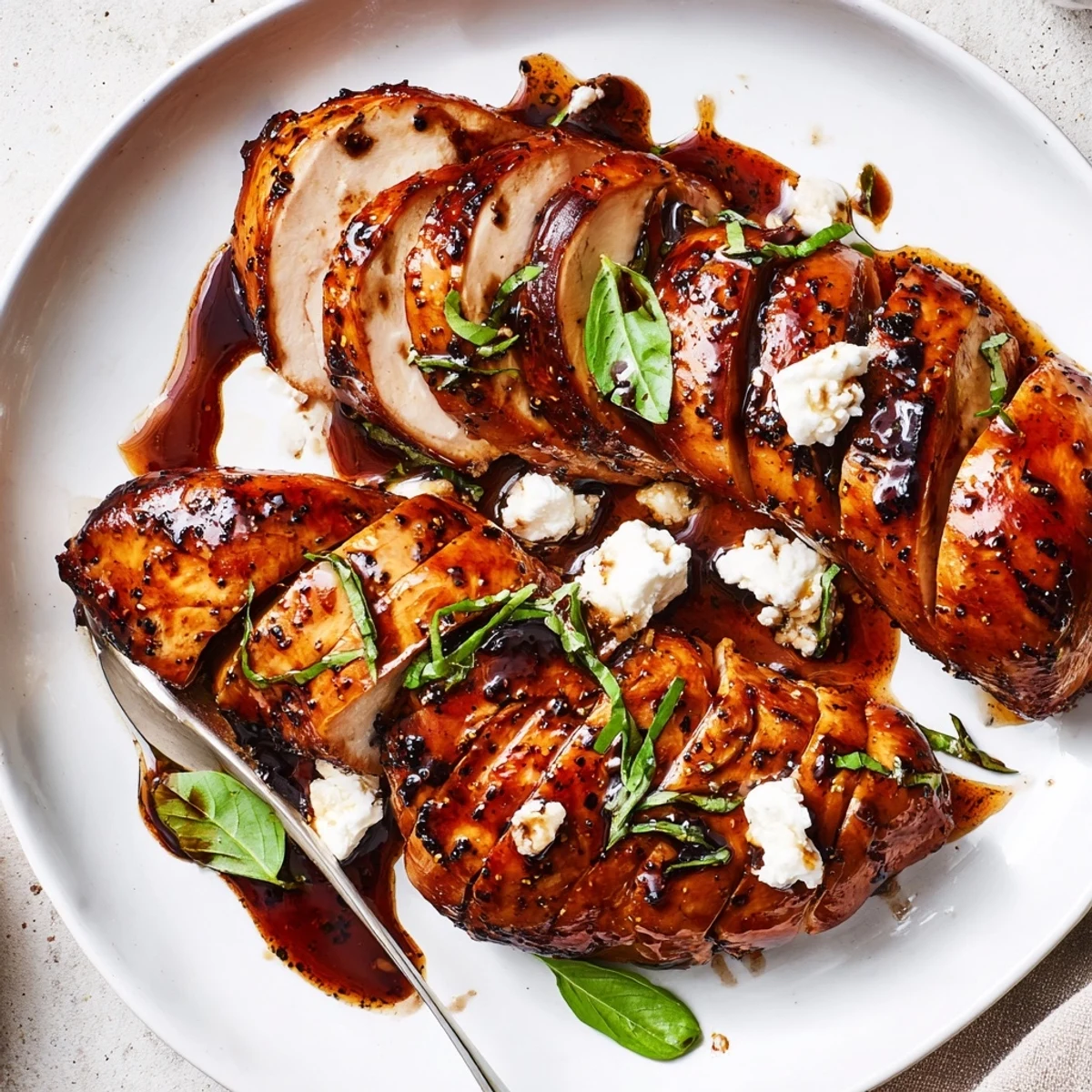
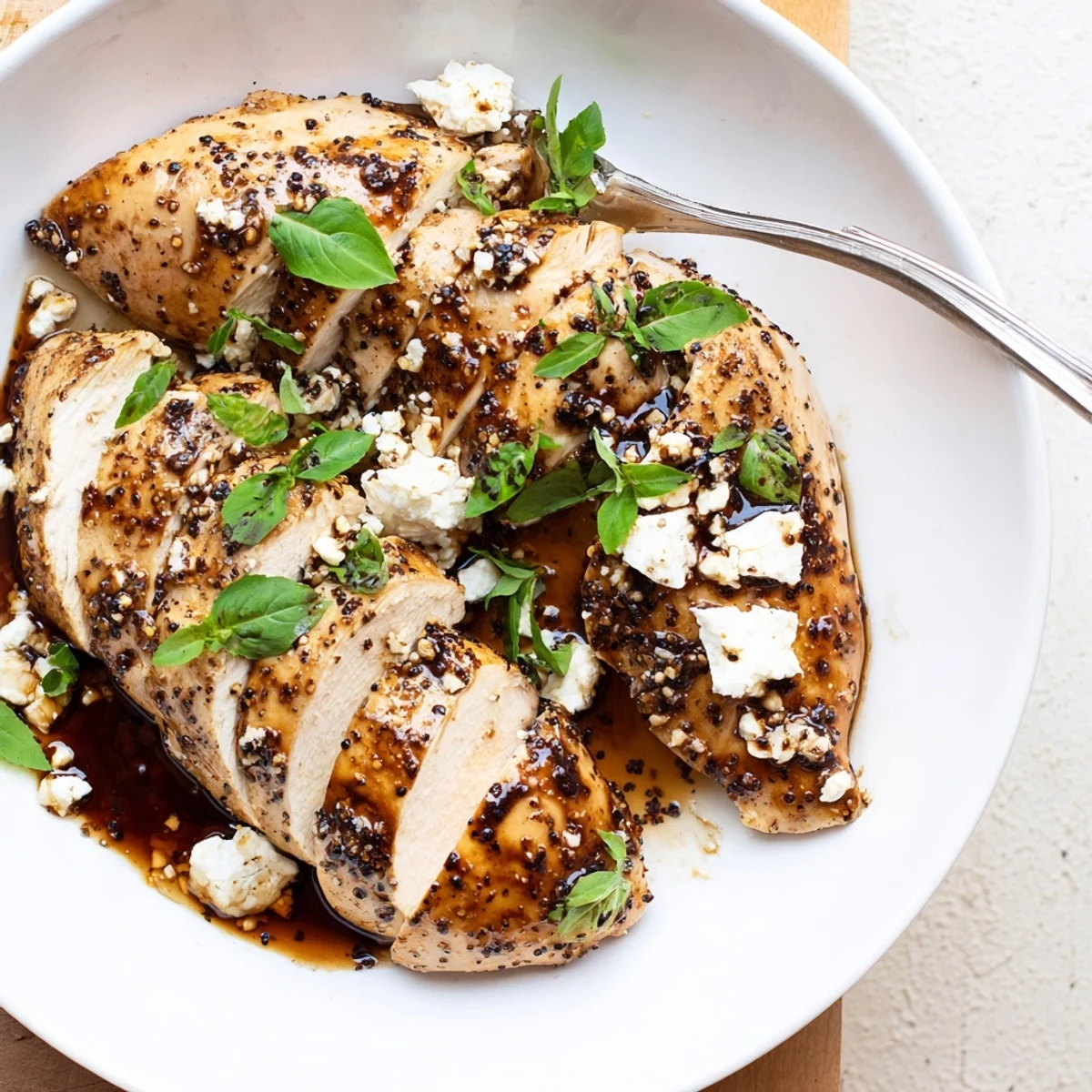
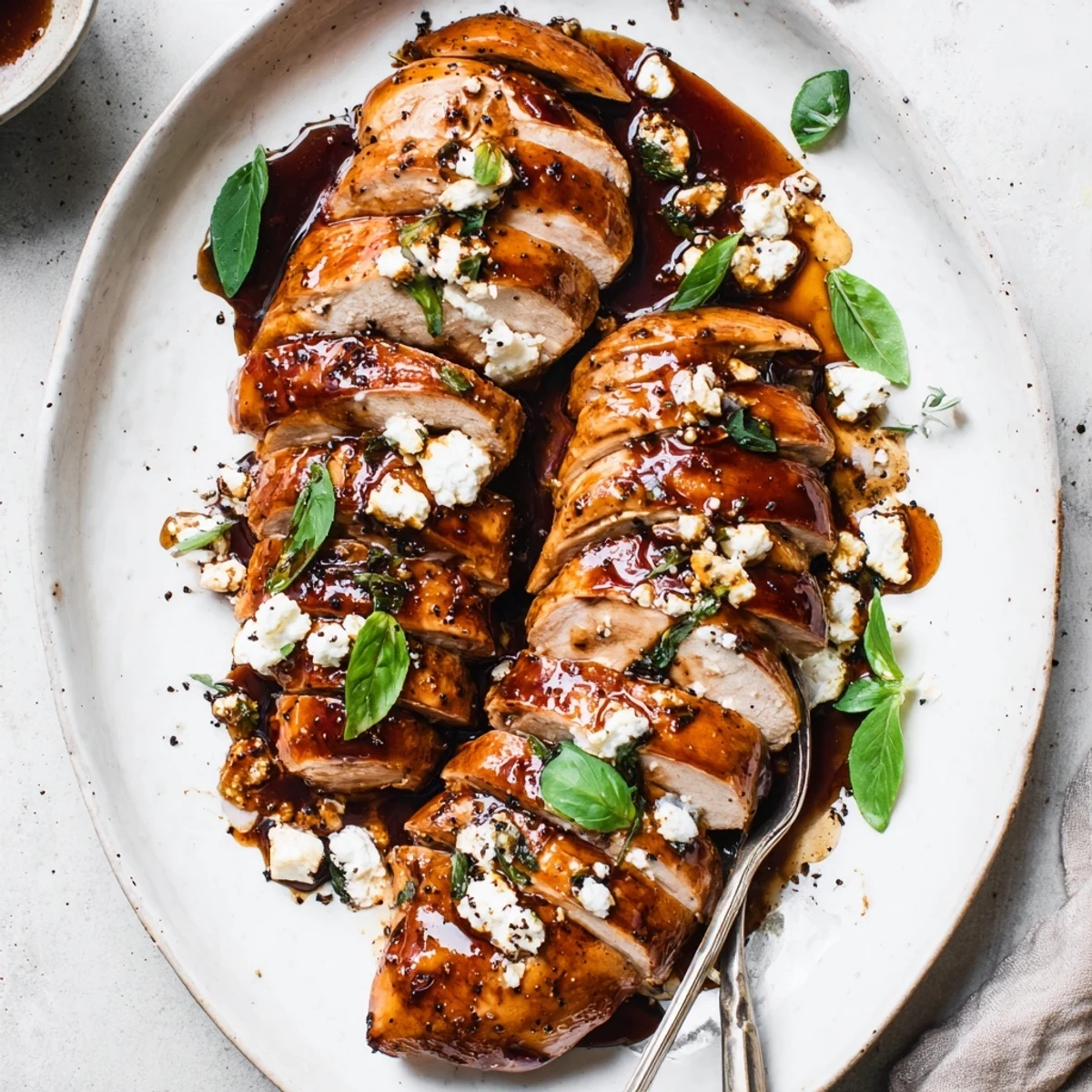
 Bright, sweet-tangy balsamic glaze coats pan-roasted chicken breasts, then are topped with crumbled goat cheese that softens for a creamy contrast. Marinade elements—honey, Dijon, garlic—build depth while a quick bake keeps meat juicy. Finish with chopped basil and an extra reduction for a glossy, herb-fresh main that pairs well with greens or roasted veg.
The smell of balsamic vinegar hitting a hot oven dish is one of those scents that makes everyone wander into the kitchen asking what is for dinner. This recipe came together one Tuesday when I had goat cheese leftover from a dinner party and basil threatening to bolt in the garden. It has since become the meal I make when I want something impressive without any real effort.
My neighbor Karen stopped by once while this was in the oven and ended up staying for dinner because she could not stop talking about the smell. I only had enough for three plates that night, so I ate standing at the counter with a fork straight from the dish. Some meals are better that way.
Ingredients
- 4 boneless skinless chicken breasts: Pound them to even thickness so they all finish cooking at the same time and nobody gets a dry piece.
- 1/3 cup balsamic vinegar: Use a decent one here because it is the backbone of the entire glaze and you will taste the difference.
- 2 tablespoons honey: This balances the sharpness of the vinegar and helps everything caramelize into a sticky beautiful mess.
- 1 tablespoon Dijon mustard: It adds a subtle heat and acts as an emulsifier so the glaze stays blended instead of separating.
- 2 cloves garlic minced: Fresh only because the jarred stuff gets lost in the balsamic and you want that sharp bite.
- 2 tablespoons olive oil: Keeps the chicken moist and carries flavor across every surface.
- 1/2 teaspoon salt and 1/4 teaspoon black pepper: Simple seasoning lets the glaze be the star.
- 4 oz goat cheese crumbled: Let it come to room temperature so it softens evenly across the hot chicken.
- 1/4 cup fresh basil chopped: Tear it by hand right before serving because cutting with a knife bruises the leaves and turns them dark.
Instructions
- Preheat and prep:
- Set your oven to 400 degrees F and let it fully come to temperature while you mix the glaze. A hot oven from the start gives you that caramelized edge on the chicken.
- Whisk the glaze:
- Combine balsamic vinegar, honey, Dijon, garlic, olive oil, salt, and pepper in a bowl until smooth and fragrant. Taste it on your finger and adjust the honey if your vinegar is particularly sharp.
- Coat the chicken:
- Place the chicken in a baking dish and pour the glaze over every piece, turning each one so no surface is left bare. Even a quick ten minute soak makes a noticeable difference in flavor.
- Bake and baste:
- Slide the dish into the oven for 20 to 25 minutes, pulling it out once halfway through to spoon the pooled juices back over the top. You are looking for 165 degrees F internal temperature and golden edges.
- Add the goat cheese:
- Scatter crumbled goat cheese across the hot chicken and return it to the oven for just two or three minutes until it softens and begins to slump. Do not walk away because it goes from perfect to overdone quickly.
- Finish and serve:
- Transfer each breast to a plate, spoon pan sauce over the top, and shower with fresh basil. Add an extra drizzle of balsamic glaze and cracked pepper if you are feeling fancy, then serve right away while the cheese is still gooey.
 Pin it
 I made this for my sister the night she told me she was pregnant with her first child, and every time I smell that balsamic sweetness I think of her face lighting up across the table. Food does that sometimes, tying itself to a moment so you can never fully separate the two again.
What to Serve Alongside
Roasted asparagus or Brussels sprouts go into the same oven on a separate sheet pan and everything lands on the table at once. A simple arugula salad with lemon vinaigrette cuts through the richness of the goat cheese perfectly. Mashed potatoes are never a bad idea if you want something comforting to soak up that extra pan sauce.
Easy Swaps That Work
Chicken thighs work beautifully if you prefer dark meat and they stay even juicier with less attention. Arugula or parsley can stand in for basil when the garden is bare or you forgot to grab some at the store. A store bought balsamic reduction drizzled at the end adds a concentrated tang that tastes like you tried much harder than you did.
Getting It on the Table Fast
The whole thing comes together in about forty minutes from the moment you open the fridge, which makes it realistic for a weeknight. I usually mix the glaze first, then prep the chicken and let it sit while the oven heats so nothing feels rushed. Cleanup is just one dish and a whisk, which is honestly half the reason this stays in my regular rotation.
- Use a metal baking dish rather than glass for better caramelization on the edges.
- Measure all glaze ingredients into the baking dish itself to save washing a bowl.
- Start checking the temperature at twenty minutes so you never accidentally overcook the chicken.
 Pin it
 Keep this one in your back pocket for everything from a random Tuesday to a dinner party where you want to look like you tried really hard. It is the kind of recipe that makes people think you know your way around a kitchen, even if you just learned it today.
Recipe Q&A Section
- → How long should I bake the chicken to keep it juicy?
-
Bake at 400°F (200°C) for about 20–25 minutes for average boneless breasts, or until the internal temperature reaches 165°F (74°C). Thicker breasts may need a few extra minutes; let the meat rest 5 minutes before slicing to retain juices.
- → Can I use chicken thighs instead of breasts?
-
Yes. Boneless thighs are more forgiving and stay moist; reduce or increase time slightly depending on size (about 20–30 minutes). Bone-in thighs will take longer—check for an internal temp of 165°F (74°C).
- → How do I make a glossy balsamic reduction?
-
Simmer balsamic vinegar with honey and a pinch of salt over medium heat until it thickens and coats the back of a spoon, about 6–8 minutes. Watch closely to avoid burning; it will thicken more as it cools.
- → What are good substitutes for goat cheese?
-
Feta or ricotta salata provide a similar tang and crumbly texture; burrata adds creaminess. For dairy-free options, use a soft cashew or almond-based cheese for a comparable creamy finish.
- → Can components be prepared ahead of time?
-
Yes. Whisk the glaze and marinate the chicken up to 2 hours in the fridge. The balsamic reduction can be made a day ahead and reheated gently. Add goat cheese and basil just before serving for best texture and color.
- → What sides pair well with this dish?
-
Roasted vegetables, a crisp green salad, mashed potatoes or cauliflower mash, and simple steamed grains complement the sweet-tangy glaze. A light herb salad or sautéed greens balances the richness of the cheese.