
 Pin it
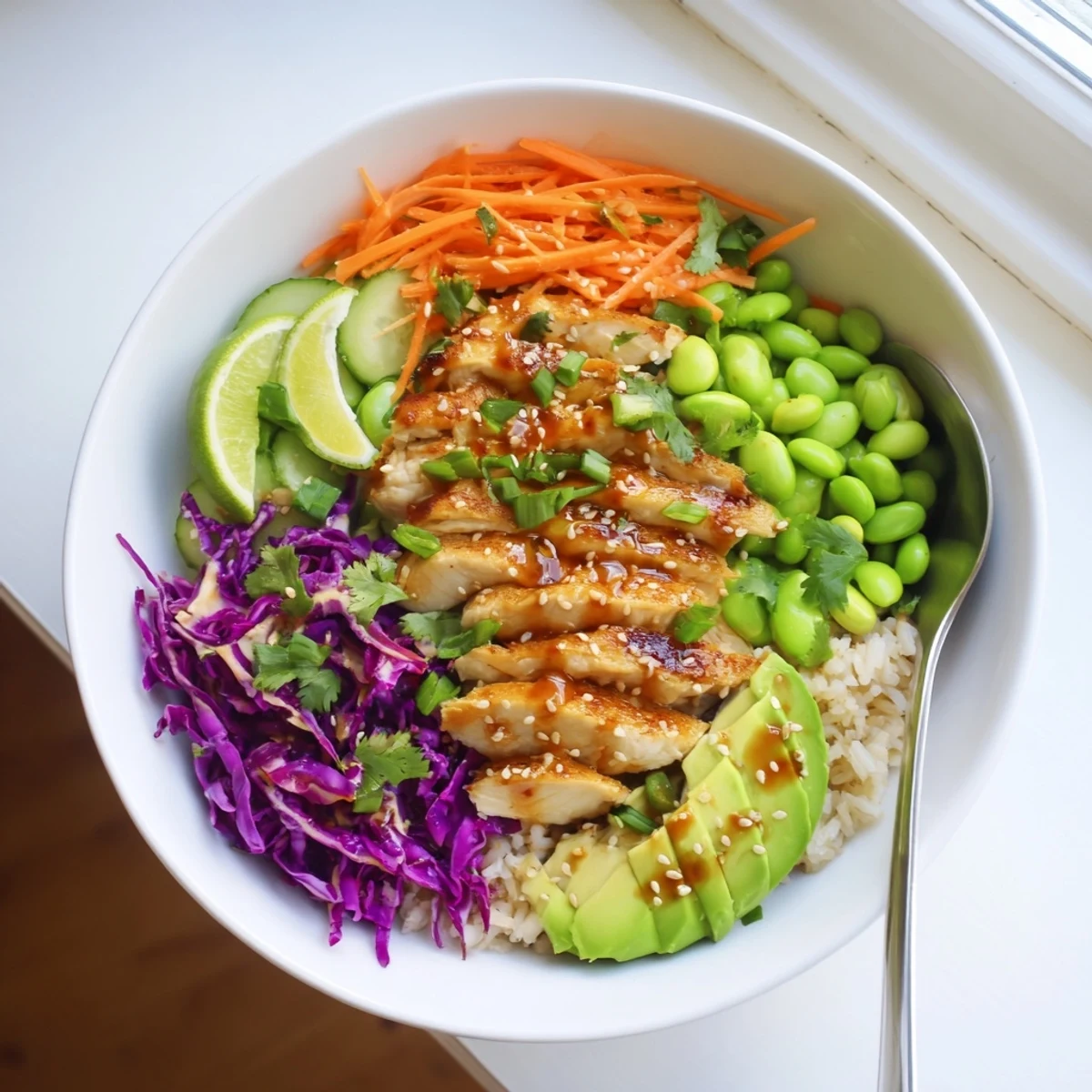
 This Asian-inspired chicken power bowl brings together tender soy-marinated chicken strips with a vibrant mix of crisp red cabbage, shredded carrots, edamame, and creamy avocado over fluffy rice.
The star of the dish is the tangy sesame-ginger dressing that ties every component together with a balance of savory, sweet, and subtle heat. Ready in just 40 minutes with 20 minutes of prep, it's an ideal weeknight meal that delivers 34 grams of protein per serving.
Customize freely with your favorite vegetables, swap brown rice for quinoa or cauliflower rice, or replace chicken with grilled tofu for a plant-based version.
The smell of sesame oil hitting a hot pan has a way of pulling people into the kitchen faster than any dinner bell could. My roommate in college used to hover near the stove whenever I made these bowls, chopsticks already in hand, pretending she was just passing through. Something about the combination of ginger, soy, and that nutty sesame aroma turns a regular weeknight into something worth sitting down for. This power bowl grew out of those cramped apartment dinners, thrown together with whatever vegetables were still crisp in the crisper drawer.
I started meal prepping these bowls every Sunday after a particularly brutal stretch of takeout containers piling up on my desk. My coworker Karen noticed the change immediately and asked if I had started some fancy diet program. I just handed her a bowl and let the food do the talking, and by Tuesday she was asking for the recipe.
Ingredients
- Boneless skinless chicken breast (500 g): Slice it into even strips so every piece cooks at the same rate and absorbs the marinade uniformly.
- Soy sauce (2 tbsp for marinade, 3 tbsp for dressing): Use tamari if you need gluten free, and reach for a good quality bottle because it is the backbone of every salty umami note here.
- Sesame oil (1 tbsp for marinade, 1 tbsp for dressing): Toasted sesame oil is what you want, not the neutral kind, because that deep nutty flavor is irreplaceable.
- Rice vinegar: Adds a clean brightness that keeps the whole bowl from feeling heavy, and a little goes a long way.
- Honey or maple syrup: Just a teaspoon in the marinade and a tablespoon in the dressing rounds out the acidity and balances the heat.
- Garlic and fresh ginger: Fresh is non negotiable here because the powdered versions will not give you that punchy aromatic kick this dish relies on.
- Brown rice or jasmine rice (2 cups cooked): Brown rice adds a chewy nuttiness but jasmine rice works beautifully if you want something softer and more fragrant.
- Red cabbage, carrots, edamame, cucumber, and avocado: Think of these as your crunch and creaminess squad, each one bringing a different texture to keep every bite interesting.
- Sriracha (optional): A teaspoon in the dressing gives a gentle warmth rather than fire, so even spice skeptics usually enjoy it.
- Sesame seeds, cilantro, scallions, and lime: These finishing touches may seem optional but they elevate the bowl from good to the thing you keep thinking about the next day.
Instructions
- Whisk the marinade together:
- Combine the soy sauce, sesame oil, rice vinegar, honey, minced garlic, and grated ginger in a medium bowl until it smells like a tiny Asian market exploded in the best way.
- Coat and rest the chicken:
- Toss your chicken strips in the marinade and let them sit for at least ten minutes while you chop vegetables, or up to overnight if you are the planning type.
- Sear the chicken:
- Heat a non stick skillet over medium high heat until it shimmers, then cook the strips three to four minutes per side until they develop a gorgeous golden crust and are cooked through.
- Blend the sesame ginger dressing:
- Whisk all dressing ingredients in a small bowl until the honey dissolves and the dressing looks glossy and cohesive, tasting for balance before moving on.
- Build each bowl with intention:
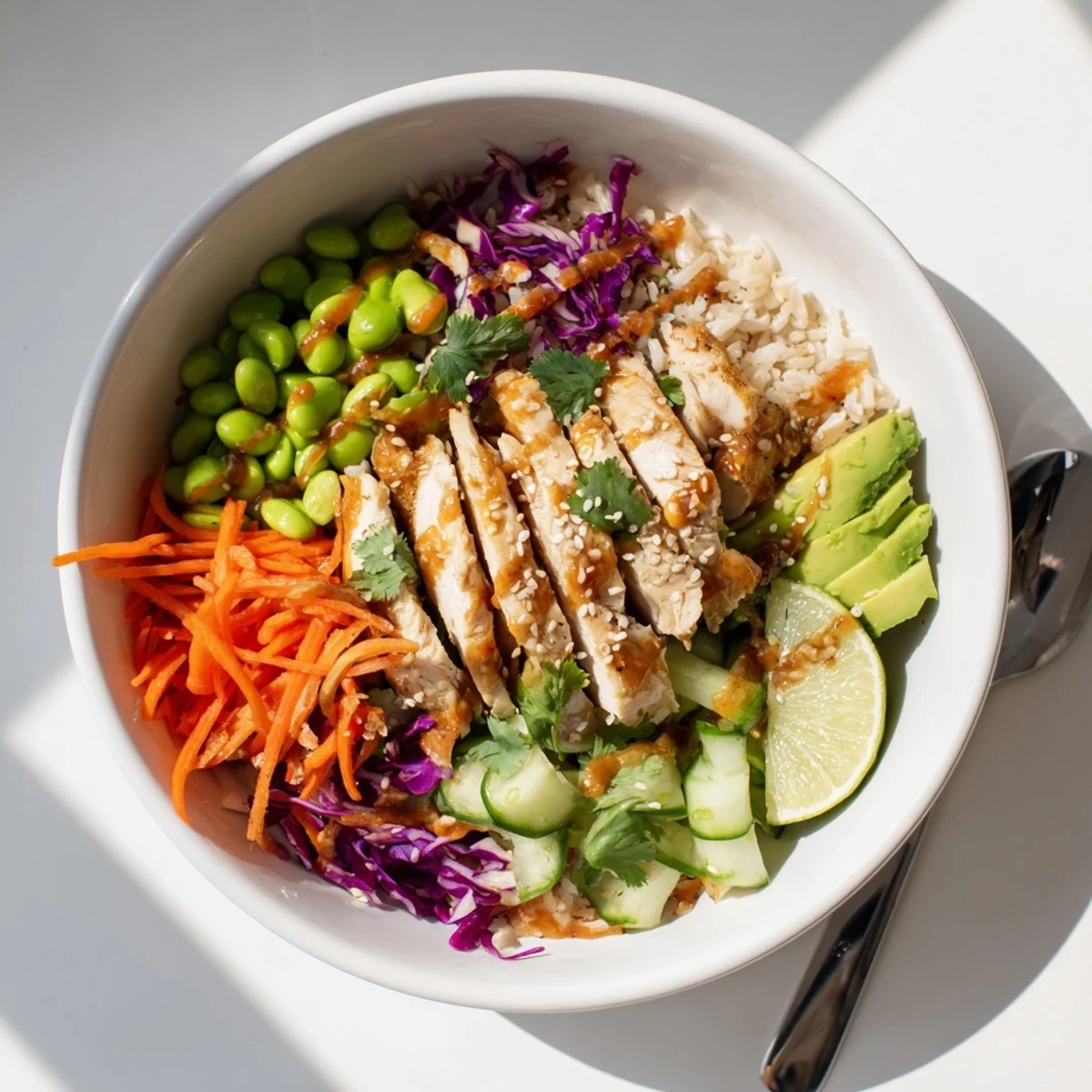
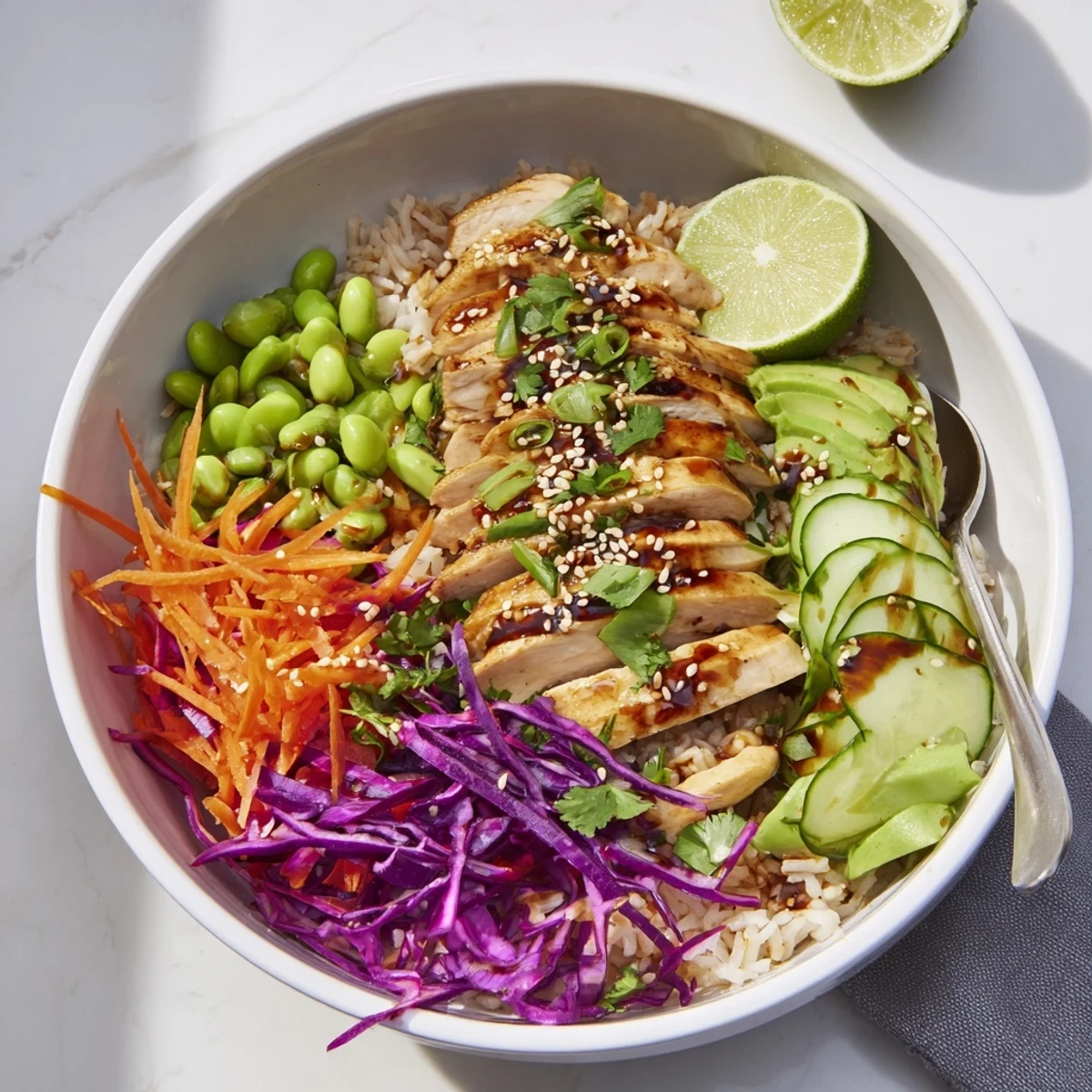
- Divide the rice among four bowls and arrange the cabbage, carrots, edamame, cucumber, and avocado in colorful sections rather than piling them into a chaotic heap.
- Finish with flair:
- Top with the seared chicken strips, drizzle the dressing generously over everything, and scatter sesame seeds, cilantro, scallions, and a squeeze of lime to bring it all home.
 Pin it
 There was a Tuesday night when my partner walked in soaked from rain, dropped his bag, and just stood in the kitchen doorway watching me arrange vegetables in little sections across four bowls. He said it looked like I was painting, and honestly that is exactly how assembling a good power bowl should feel.
Swaps and Substitutions
Grilled tofu or tempeh takes to the same marinade beautifully if you want a plant based version. I discovered this during a month where I was trying to eat less meat, and the tofu actually crisped up better than the chicken did on my first attempt. Bell peppers, snap peas, or thinly sliced radishes can stand in for any vegetable you are missing, and quinoa or cauliflower rice work just as well as brown rice for a lighter base.
Allergen Watch
This recipe contains soy from the soy sauce and edamame, sesame from the oil and seeds, and avocado which is technically a latex related allergen some people need to watch for. Vegans should swap the honey for maple syrup, and anyone avoiding gluten needs to use tamari and double check every sauce label. I once served this to a friend without mentioning the sesame seeds on top and felt terrible about it, so now I always ask before cooking for new people.
Storage and Leftovers
Store each component in its own container and you will have lunch worth looking forward to for up to three days. The cabbage and carrots actually improve overnight as they soften slightly and absorb ambient flavors from the fridge. The dressing keeps in a jar for a full week, which means you can double it and drizzle it over salads, noodles, or roasted vegetables all week long.
- Keep avocado slices in a separate container with a squeeze of lime to prevent browning.
- Reheat chicken gently in a skillet rather than a microwave to maintain that hard earned crust.
- Assemble fresh each time rather than building all four bowls at once for the best texture.
 Pin it
 A really good power bowl is less about following rules and more about paying attention to color, texture, and what sounds good to you on that particular day. Trust your instincts, taste as you go, and enjoy every single bite.
Recipe Q&A Section
- → Can I meal prep these chicken power bowls in advance?
-
Yes, these bowls are excellent for meal prep. Cook the chicken and prepare the vegetables up to 3 days in advance. Store the dressing separately in a jar and the components in airtight containers. Assemble when ready to eat for maximum freshness and texture.
- → What can I substitute for soy sauce to make this gluten-free?
-
Replace soy sauce with tamari, which is naturally gluten-free and delivers a similar umami flavor. Always verify the labels on all sauces and condiments to ensure they are certified gluten-free, as some brands may contain trace wheat.
- → How do I make a vegetarian version of this bowl?
-
Swap the chicken for grilled tofu or tempeh marinated in the same soy-sesame mixture. Press firm tofu for 15 minutes before cutting into strips, then pan-fry until golden. Replace honey with maple syrup to keep it fully vegan.
- → What's the best rice to use for these bowls?
-
Jasmine rice offers a fragrant, slightly sticky base, while brown rice adds extra fiber and a nutty chew. Quinoa, cauliflower rice, or even rice noodles work well as alternatives depending on your nutritional preferences and dietary needs.
- → How long should I marinate the chicken?
-
A minimum of 10 minutes works well for a quick meal, but marinating for 30 minutes to 2 hours in the refrigerator will yield more flavorful and tender chicken. Avoid marinating beyond 4 hours as the acid in rice vinegar can start to break down the meat texture.
- → Can I serve this bowl cold?
-
Absolutely. Let the cooked chicken cool completely before assembling. These bowls are delicious served chilled, making them perfect for packed lunches or warm-weather meals. The sesame-ginger dressing actually tastes even more vibrant when the ingredients are at room temperature or cold.