
 Pin it
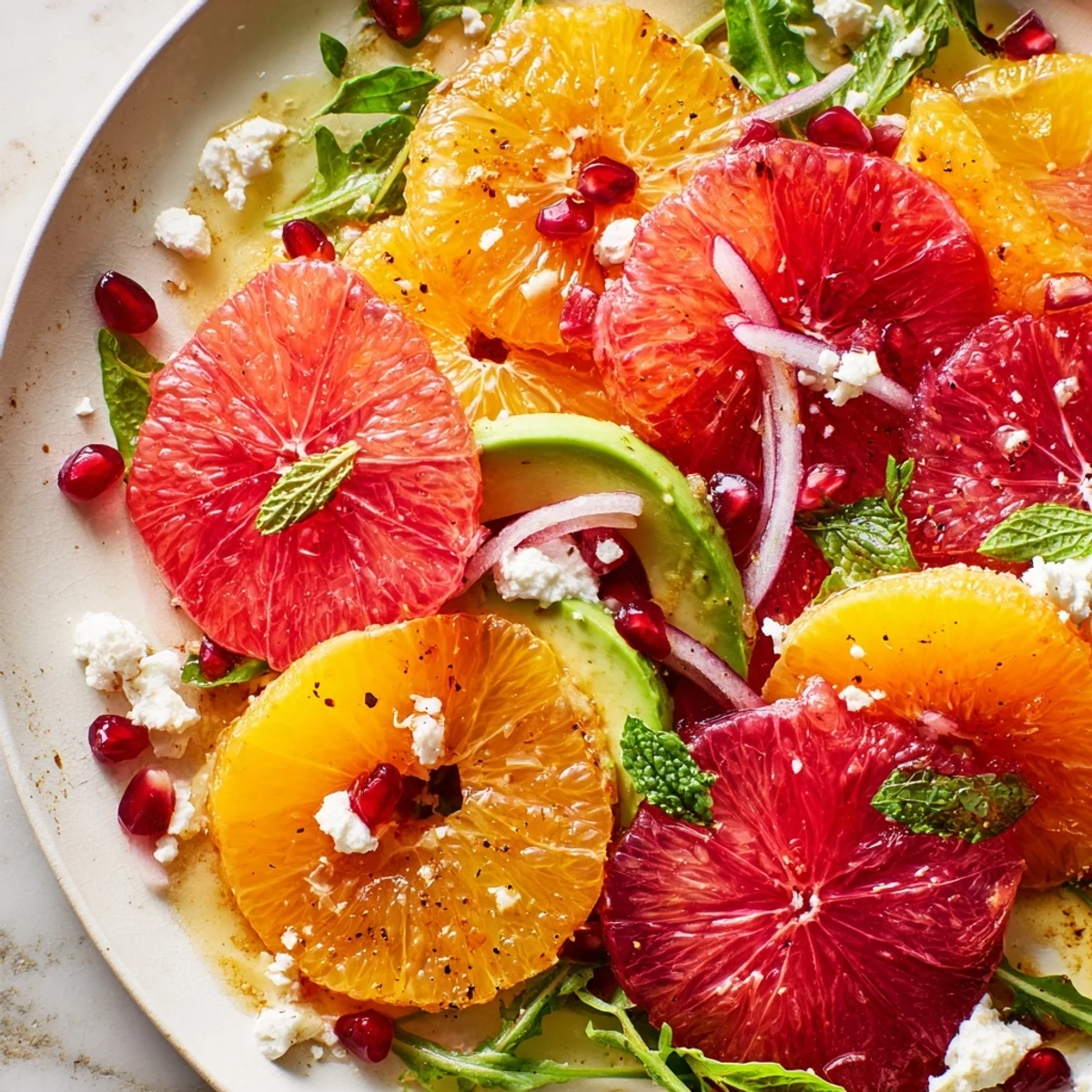
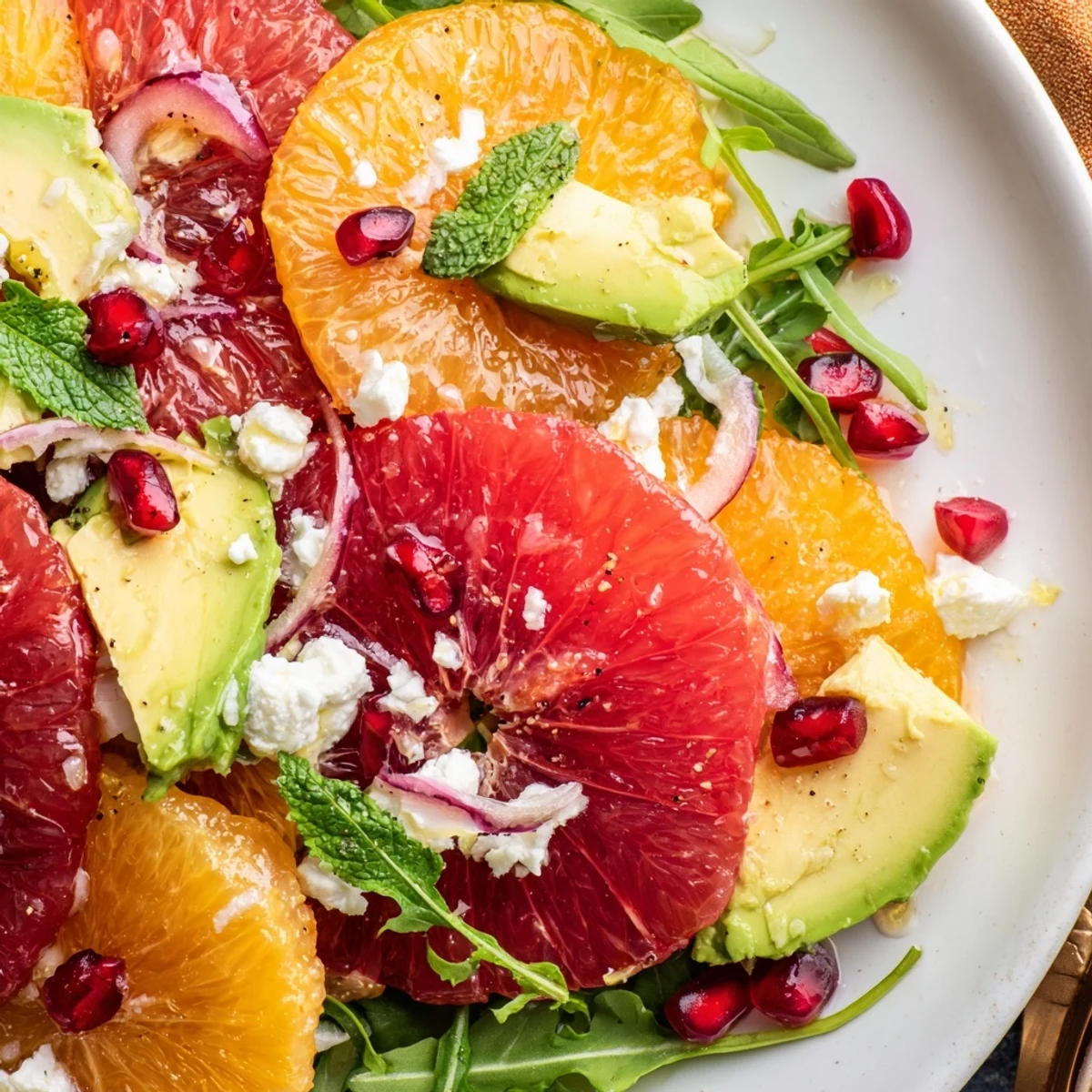
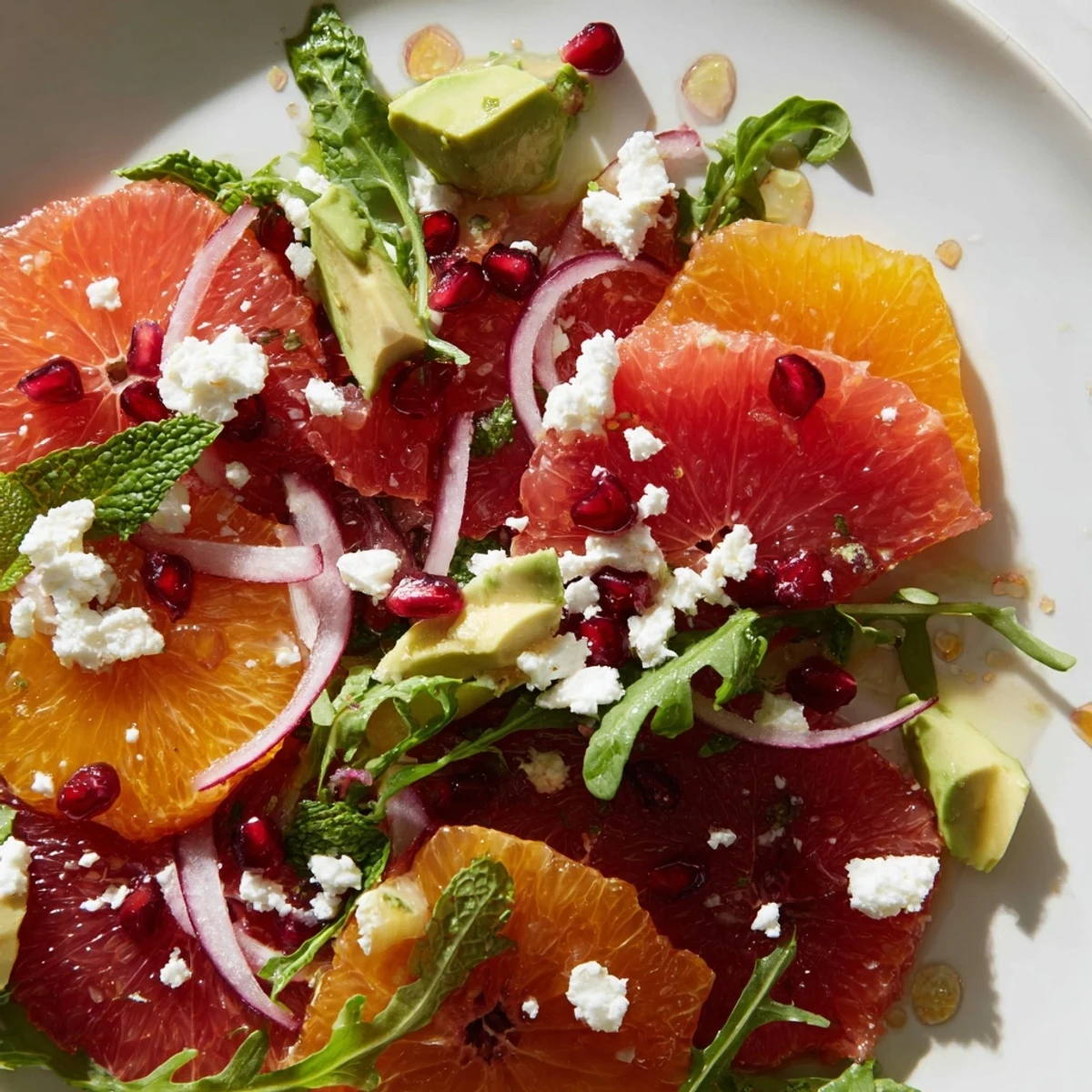
 This vibrant Mediterranean salad brings together the season's best citrus — oranges, grapefruit, and blood orange — layered over peppery arugula with creamy avocado slices and jewel-like pomegranate arils.
A simple honey-lemon dressing ties everything together, while crumbled feta adds a briny, salty finish. Ready in just 15 minutes with no cooking required, it's an ideal starter or light lunch that's both vegetarian and gluten-free.
The window was open and a warm breeze kept fluttering the recipe card propped against my cutting board, which felt fitting because this salad tastes like a Mediterranean afternoon decided to show up in my kitchen. I had bought a pomegranate on impulse at the farmers market, mostly because the vendor cracked one open and the seeds looked like tiny garnet earrings. That afternoon I stood at the counter peeling citrus until my hands smelled like sunshine and the whole kitchen hummed with color.
I made this for a friend who had just come back from a trip to southern Spain and she went quiet after the first bite, which I initially worried about until she said it reminded her of a seaside café in Málaga. We sat on the back porch eating straight from the platter, juice running down our wrists, not even bothering with proper plates. That is the kind of food this is.
Ingredients
- Citrus fruits (2 large oranges, 2 medium pink grapefruits, 1 small blood orange): The mix of orange, pink, and deep red creates a visual feast, and each variety brings its own balance of sweetness and acidity. Blood orange is optional but those deep burgundy slices elevate everything.
- 1 ripe avocado: Creaminess is the secret bridge between the sharp citrus and the crumbly salty feta. Choose one that yields slightly when pressed but is not mushy.
- ½ cup pomegranate arils: These are the jewels in the title for good reason. They pop with tart sweetness and catch the light beautifully scattered across the salad.
- ¼ small red onion, thinly sliced: A sharp little bite that keeps the salad from being too gentle. Slice it paper thin so it whispers rather than shouts.
- 2 cups baby arugula or mixed greens: A peppery base that anchors the fruit and gives the salad body. Arugula is my favorite but any tender green works.
- ½ cup feta cheese, crumbled: The salty crumbly finish that ties everything together. Use a good quality block and crumble it yourself for the best texture.
- 3 tbsp extra virgin olive oil and 1 tbsp fresh lemon juice: A simple dressing that lets the ingredients shine rather than drowning them. The olive oil should be one you would happily taste on its own.
- 1 tsp honey or maple syrup: Just enough sweetness to round out the lemon. Maple syrup works beautifully if you want to keep it fully plant based.
- ½ tsp sea salt and ¼ tsp black pepper: Seasoning that wakes up every flavor. Do not skip these even though the salad seems simple.
- 2 tbsp fresh mint leaves, torn: An optional garnish that adds a cool herbal brightness. Tearing rather than chopping keeps the leaves from bruising.
Instructions
- Whisk the dressing:
- In a small bowl, combine the olive oil, lemon juice, honey, sea salt, and pepper. Whisk until the dressing looks cloudy and slightly thickened, which means it has emulsified and will coat the salad evenly.
- Arrange the citrus canvas:
- Lay the orange, grapefruit, and blood orange slices across a large serving platter in a slightly overlapping pattern. Scatter the arugula and red onion over the top so the colorful fruit peeks through underneath.
- Add the creamy and crunchy elements:
- Tuck avocado slices among the citrus and sprinkle pomegranate arils across the whole platter. Try to distribute them evenly because every bite deserves one of those little pops.
- Dress and finish:
- Drizzle the dressing over the entire salad, then crumble the feta generously on top. Scatter torn mint leaves if using and serve right away while the colors are at their brightest.
 Pin it
 There was a January evening when I brought this to a potluck where everyone else had made heavy stews and casseroles, and the salad disappeared first. Something about bright citrus in the dead of winter makes people happy in a way that feels almost defiant.
Perfect Citrus Every Time
The trick to beautiful citrus slices is using a sharp knife and cutting off the top and bottom first so the fruit sits flat on the board. Then follow the curve of the fruit with your knife to remove the peel and white pith in long strokes. Once peeled, slice crosswise into rounds and pick out any seeds you find hiding inside.
Making It Your Own
This salad welcomes experimentation with open arms. Toasted pistachios or walnuts scattered on top add a satisfying crunch that contrasts beautifully with the soft avocado and juicy fruit. You could swap feta for goat cheese if you prefer a tangier creamier note, or use a plant based feta to make the whole thing vegan without losing the salty richness.
Serving and Storing
This salad is best served immediately after assembling when the avocado is green and the arugula is perky. If you need to prep ahead, keep all the components stored separately in the refrigerator and assemble just before serving.
- Dressing can be made up to three days ahead and kept in a jar in the fridge.
- Pomegranate arils can be extracted a day in advance and stored in an airtight container.
- Leftover assembled salad will not keep well, so only make what you plan to eat.
 Pin it
 Keep this recipe in your back pocket for any moment that calls for something beautiful, fresh, and effortless. It never fails to make the table feel a little more celebratory.
Recipe Q&A Section
- → Can I prepare the citrus slices ahead of time?
-
Yes, you can peel and slice the citrus up to 4 hours in advance. Store the slices in an airtight container in the refrigerator. Arrange the full salad just before serving to keep the arugula fresh and the avocado from browning.
- → What's the easiest way to remove pomegranate arils?
-
Score the pomegranate skin into quarters, then gently pull it apart over a bowl of water. The arils will sink while the white membrane floats. Strain out the water and pat the arils dry before adding them to the salad.
- → Can I make this salad vegan?
-
Absolutely. Swap the feta for a plant-based feta alternative and use maple syrup instead of honey in the dressing. The flavors remain bright and satisfying with these simple substitutions.
- → Which citrus fruits work best for this salad?
-
Naval oranges, pink or ruby red grapefruit, and blood oranges offer the best combination of sweetness, color, and visual contrast. Cara Cara oranges and tangerines are also excellent additions when available.
- → How do I keep the avocado from turning brown?
-
Slice the avocado right before assembling the salad and toss it gently with a squeeze of lemon juice. The acidity slows oxidation. Arrange it on the platter last and serve immediately for the freshest appearance.
- → What can I substitute for feta cheese?
-
Goat cheese makes a great alternative with a tangier, creamier profile. Ricotta salata works well for a milder, slightly salty finish. For a dairy-free option, try a cashew-based feta crumble.