
 Pin it
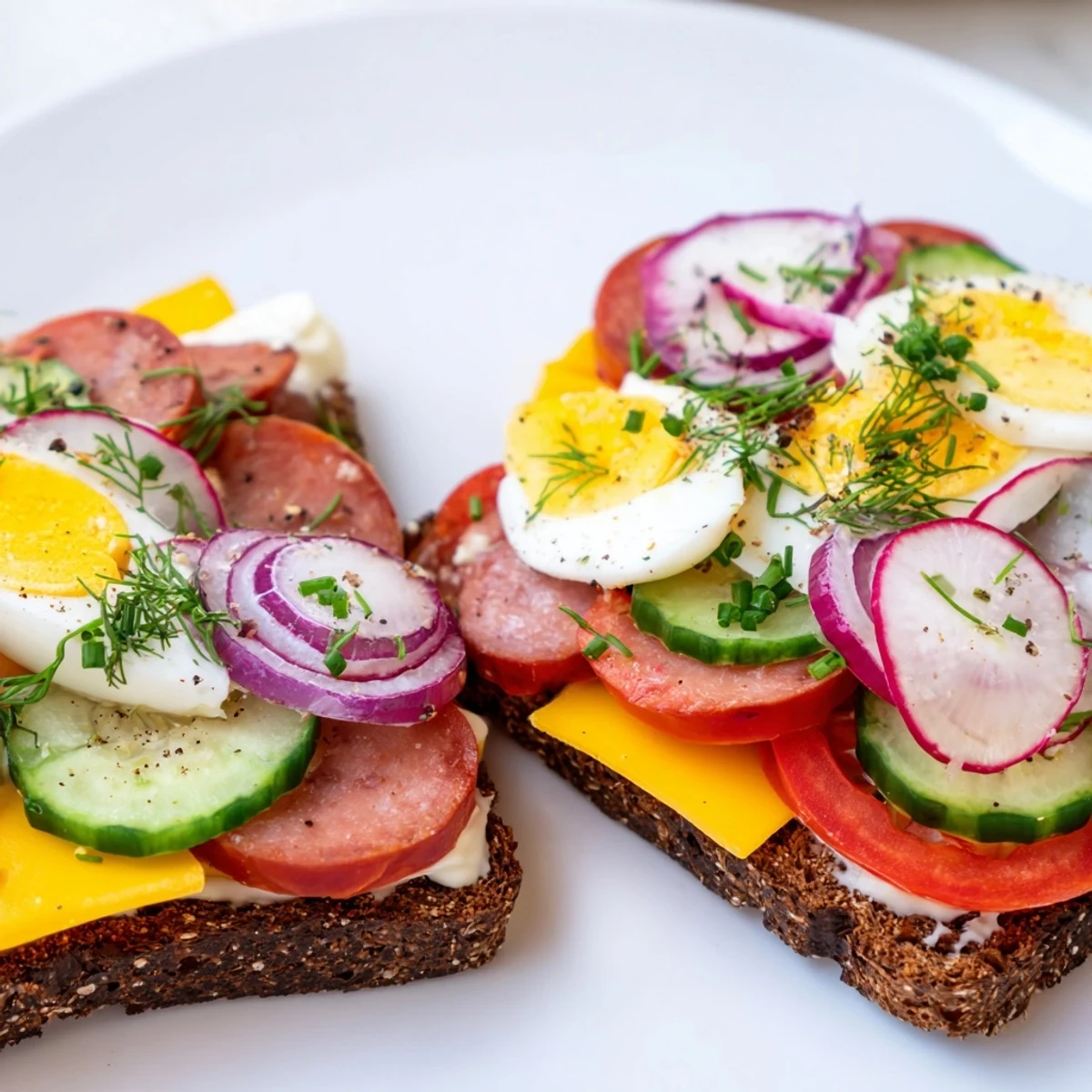
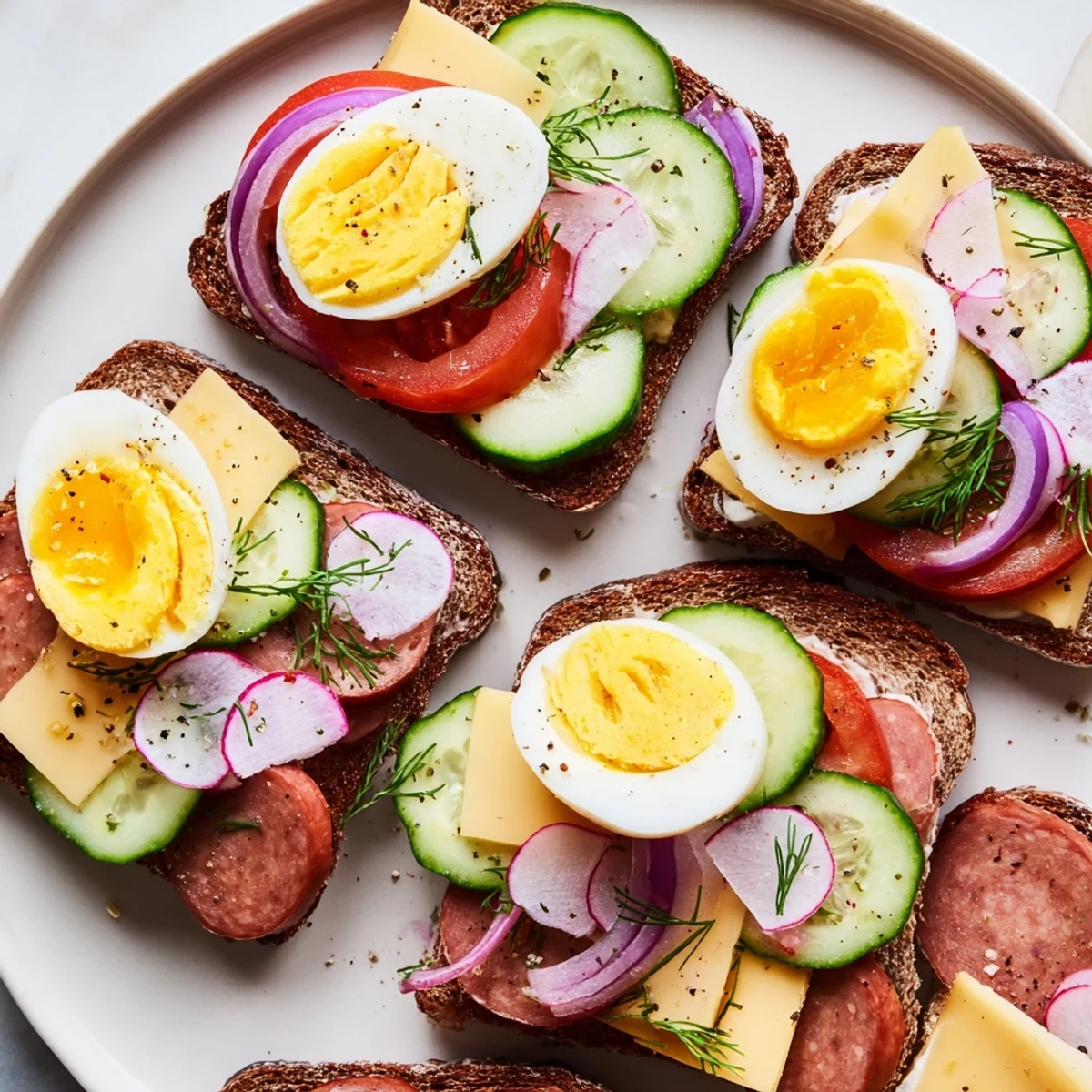
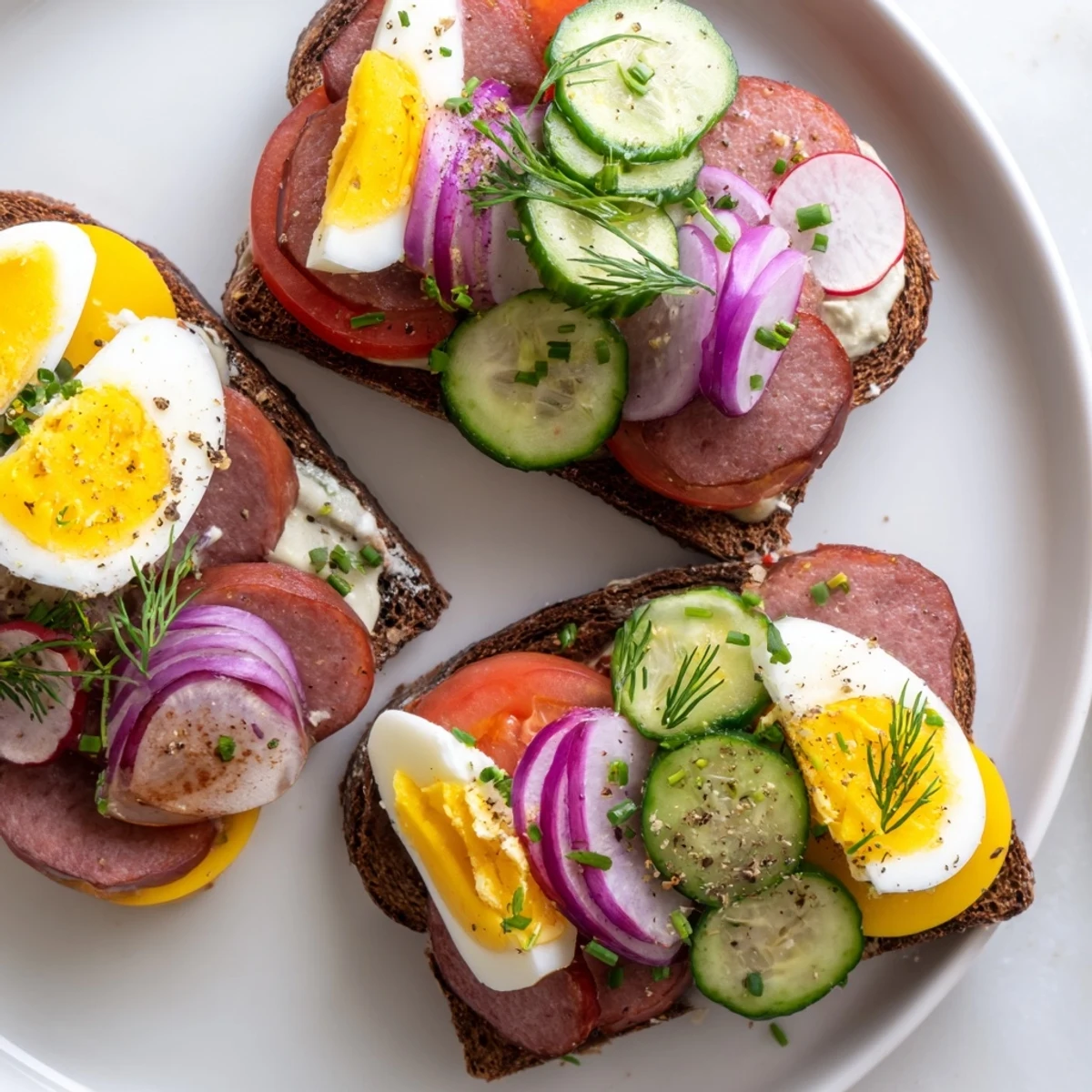
 Polish kanapki are open-faced sandwiches built on slices of rye bread or baguette, generously layered with butter or cream cheese, then topped with kielbasa, ham, cooked egg, or melted cheese.
Fresh vegetables like tomato, cucumber, radish and red onion add crunch and color, finished with a sprinkle of chives or dill and seasoned with salt and pepper.
Ready in just 15 minutes with no cooking required, these versatile sandwiches work beautifully as a breakfast, lunch, or party appetizer that feeds a crowd.
The smell of rye bread and sliced radishes takes me straight back to my grandmothers kitchen in Krakow, where open faced sandwiches were never just a snack but a whole ritual of assembling little edible portraits on crusty bread. She would lay out every topping in small bowls and let us build our own, judging each creation with theatrical seriousness. There was no wrong answer, only sandwiches that told different stories. That same spirit of playful abundance lives in every plate of kanapki I make today.
One rainy Saturday I found myself hosting three hungry friends with almost nothing in the fridge except half a loaf of rye, some leftover kielbasa, and a few sad looking vegetables. Forty five minutes later we were gathered around the counter, each person guarding their own ridiculously tall stack of toppings, laughing at who could balance the most without everything sliding off. It became our unofficial tradition after that.
Ingredients
- Rye bread or baguette (8 slices): The foundation of everything, so choose a dense, sturdy loaf that can hold generous toppings without sagging or crumbling under pressure.
- Unsalted butter, softened (3 tbsp): Acts as a moisture barrier between bread and toppings, keeping each bite structured rather than soggy.
- Cream cheese (2 tbsp, optional): A creamy alternative or companion to butter that adds a mild tang, especially good with vegetable heavy arrangements.
- Kielbasa or smoked ham (4 slices): Brings smoky, savory depth that anchors the sandwich and pairs beautifully with sharp cheese and crisp radish.
- Cooked egg (4 slices): Adds protein and a tender, satisfying texture that works wonders alongside pickled or fresh vegetables.
- Yellow cheese such as Edam or Gouda (4 slices): Melts slightly at room temperature, binding the flavors together with a gentle, nutty richness.
- Tomato (1, thinly sliced): Provides juicy acidity that cuts through the richness of butter, cheese, and cured meats.
- Cucumber (1 small, thinly sliced): Brings a clean, cool crunch that refreshes the palate between bites of something salty.
- Red onion (1/4, thinly sliced): A sharp, colorful bite that wakes up every other ingredient on the board.
- Radishes (8, thinly sliced): The peppery, crisp element that makes Polish open faced sandwiches feel distinctly authentic and vibrant.
- Fresh chives or dill, chopped: A fragrant finishing touch that ties everything together with brightness.
- Salt and freshly ground black pepper: Essential seasoning that elevates each component from flat to alive.
Instructions
- Prepare your canvas:
- Lay all eight bread slices on a clean cutting board or work surface, giving yourself plenty of room to spread and build without crowding.
- Spread the base:
- Using a butter knife, spread each slice generously with softened butter, cream cheese, or a combination of both, making sure to reach the edges so every bite is flavorful.
- Layer the heart of the sandwich:
- Place your choice of kielbasa, ham, egg slices, or cheese on each piece of bread, varying the arrangement across the plate for visual appeal and different flavor experiences.
- Build the vegetable crown:
- Arrange thin slices of tomato, cucumber, red onion, and radish on top, letting the colors overlap naturally like a small, edible mosaic.
- Season and garnish:
- Sprinkle each sandwich lightly with salt and freshly cracked pepper, then scatter chopped chives or dill over everything for a final burst of freshness.
- Serve and enjoy:
- Transfer the sandwiches to a platter and serve immediately while the bread is still sturdy and the vegetables are at their crispest.
 Pin it
 There is something quietly magical about watching people hover over a platter of open faced sandwiches, each one reaching for the particular combination that speaks to them. It is food as conversation, as personality, as a tiny reflection of whoever assembled it.
Bread Makes or Breaks This
After years of making kanapki with whatever bread I had on hand, I can say with certainty that a dense, sour rye is the gold standard. It holds up to thick spreads and juicy tomatoes without collapsing, and its flavor complements smoked meats and sharp cheese in a way that neutral breads simply cannot match. Sourdough is a worthy runner up if rye is unavailable. Avoid anything too soft or fluffy, as it will surrender under the weight of generous toppings.
Feeding a Crowd Without Stress
This recipe scales effortlessly for parties because the assembly is more like setting up a topping station than actual cooking. I like to arrange everything in small bowls along a counter and let guests build their own, which turns preparation into entertainment and guarantees everyone gets exactly what they want. It also looks incredibly impressive on a long wooden board with garnishes scattered between the sandwiches.
Small Details That Elevate Everything
The difference between a good kanapki and an unforgettable one usually comes down to a handful of tiny choices made right before serving.
- A squeeze of lemon juice over the cucumber and tomato slices brightens the whole plate.
- Toasting the bread lightly for two minutes adds a satisfying crunch without making it difficult to bite through.
- Always assemble as close to serving time as possible so nothing wilts or goes limp.
 Pin it
 Every time I set down a platter of these colorful, towering little sandwiches, the room gets a little quieter and a little happier all at once. That is the quiet power of simple food made with care and a bit of playfulness.
Recipe Q&A Section
- → What type of bread works best for kanapki?
-
Traditional Polish kanapki are made with dense rye bread, which holds up well under toppings without getting soggy. A fresh baguette, sourdough, or wholegrain loaf also works nicely for variety.
- → Can I prepare kanapki ahead of time?
-
For the best texture, assemble them shortly before serving. You can prep all toppings and slice vegetables in advance, then arrange everything on the bread just before your guests arrive.
- → What are traditional toppings for Polish open-faced sandwiches?
-
Classic toppings include kielbasa, smoked ham, hard-cooked egg slices, yellow cheese like Edam or Gouda, pickles, and fresh vegetables. A base layer of butter is standard in Polish households.
- → Are kanapki served cold or warm?
-
Kanapki are typically served cold or at room temperature. The bread is not toasted, making them a quick no-cook option that comes together in minutes with everyday ingredients.
- → How do I keep the bread from getting soggy?
-
Spread a generous layer of butter or cream cheese on the bread first, as this creates a barrier that prevents moisture from vegetables and other toppings from seeping into the bread.
- → Can I make vegetarian kanapki?
-
Absolutely. Skip the kielbasa and ham, and load up on cooked egg slices, cheese, and plenty of fresh vegetables like tomato, cucumber, radish, and onion for a satisfying meatless version.